A Love Letter to Spain
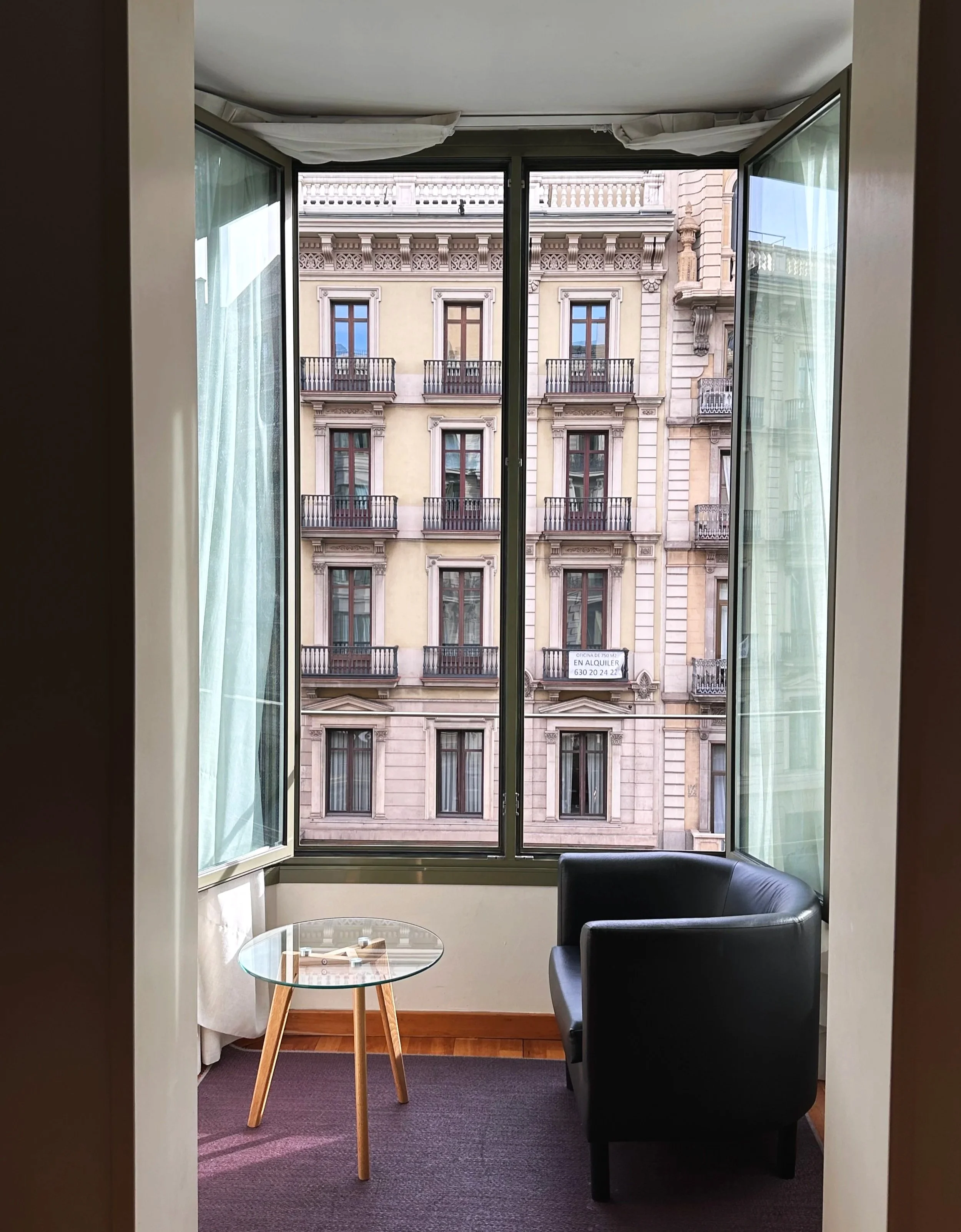
Falling in love with Spain was easy. Its cities are romantic, charming, and just endlessly fun to wander through and get lost in. Madrid and Barcelona felt like two different takes on the same story, but each with its own vibe. The wide boulevards and sun-soaked plazas of Madrid made it feel like the past and present were bumping shoulders—historic buildings rubbing elbows with modern cafés. The mood shifted in Barcelona to a more playful mood— bold art, winding architecture, and late-night bites that turned into long conversations. I was only there for a week with my family, but I still felt like I could piece together both of these city’s unique characters by their food, design, and their quirky rhythms of daily life.
How I Ate My Way Through Two Cities
Spanish dishes seem like it’s built on one simple idea: if an ingredient is already amazing, don’t mess with it—just give it some olive oil, fry this or that, and savor it. It’s comforting, flavorful, and suspiciously good at convincing you that you need “just one more tapa.” Think lots of olive oil, warm bread, salty little bites of jamón, perfectly crispy potatoes, fresh seafood, and tomatoes that actually taste like tomatoes. Everything is meant to be shared, and every meal feels a little like a celebration.
Madrid on a Fork
Madrid is a city of confidence and charm, the kind of place that has a classy vibe without ever feeling too stiff. The food here feels rooted in tradition—hearty, comforting, and utterly satisfying, never trying too hard to impress. Meals felt like tiny gems sprinkled throughout the day: a morning cortado at a sunlit café (best one in my opinion is Acid Coffee), watching the city slowly wake; a midday vermouth or caña paired with olives and perfectly cured meats, and tapas that somehow seemed to multiply as the night went on, encouraging conversation, laughter, and lingering.
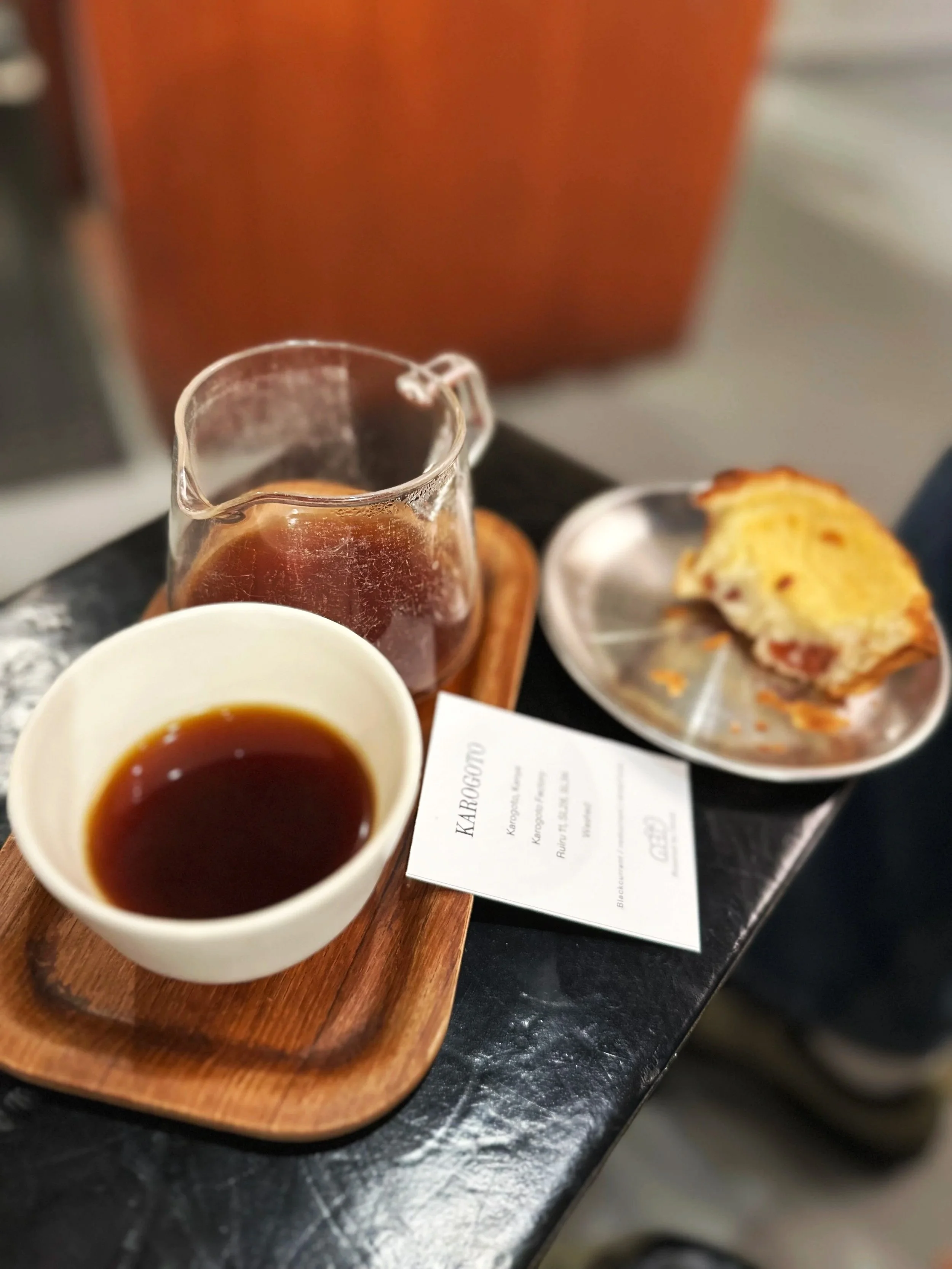
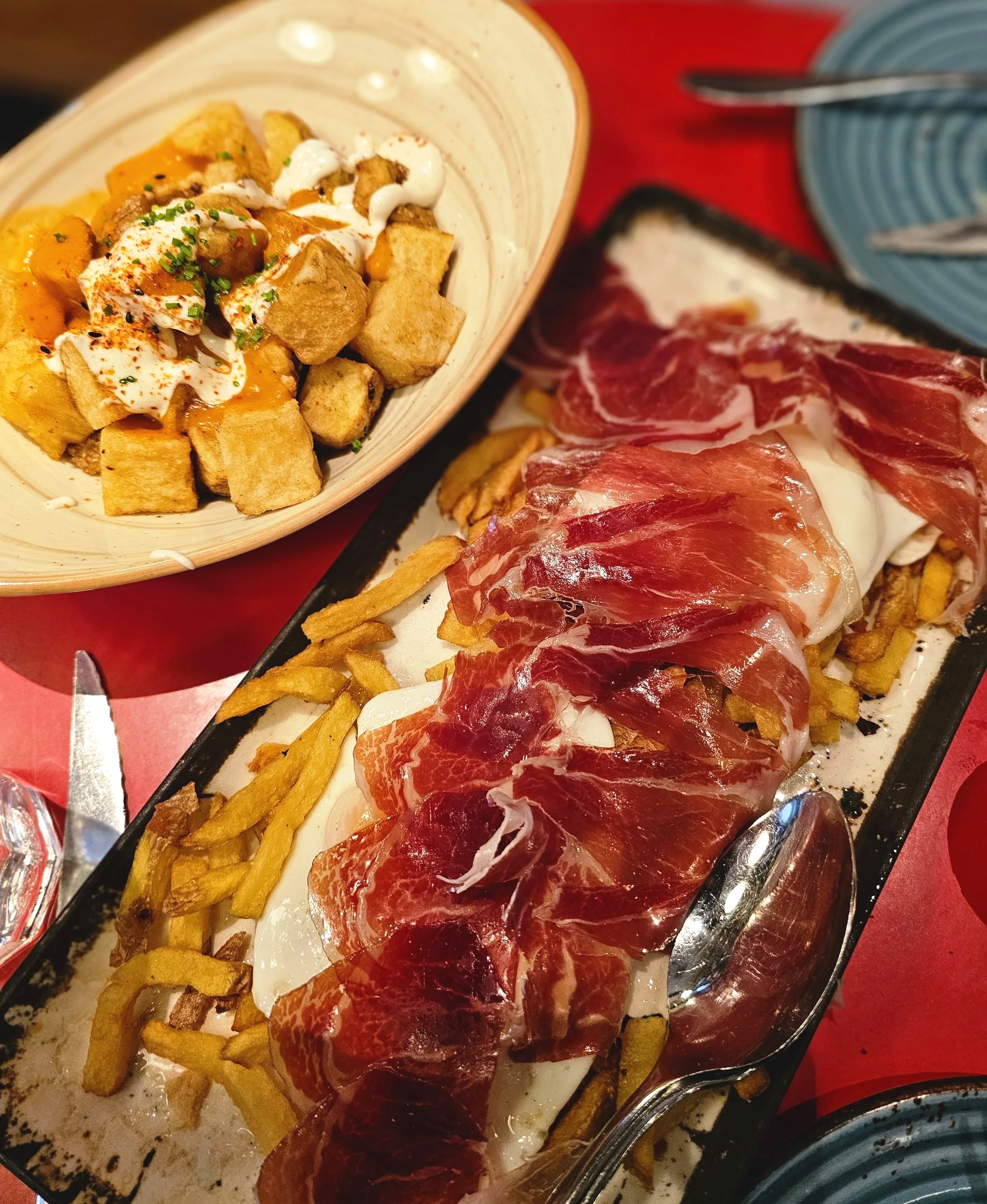
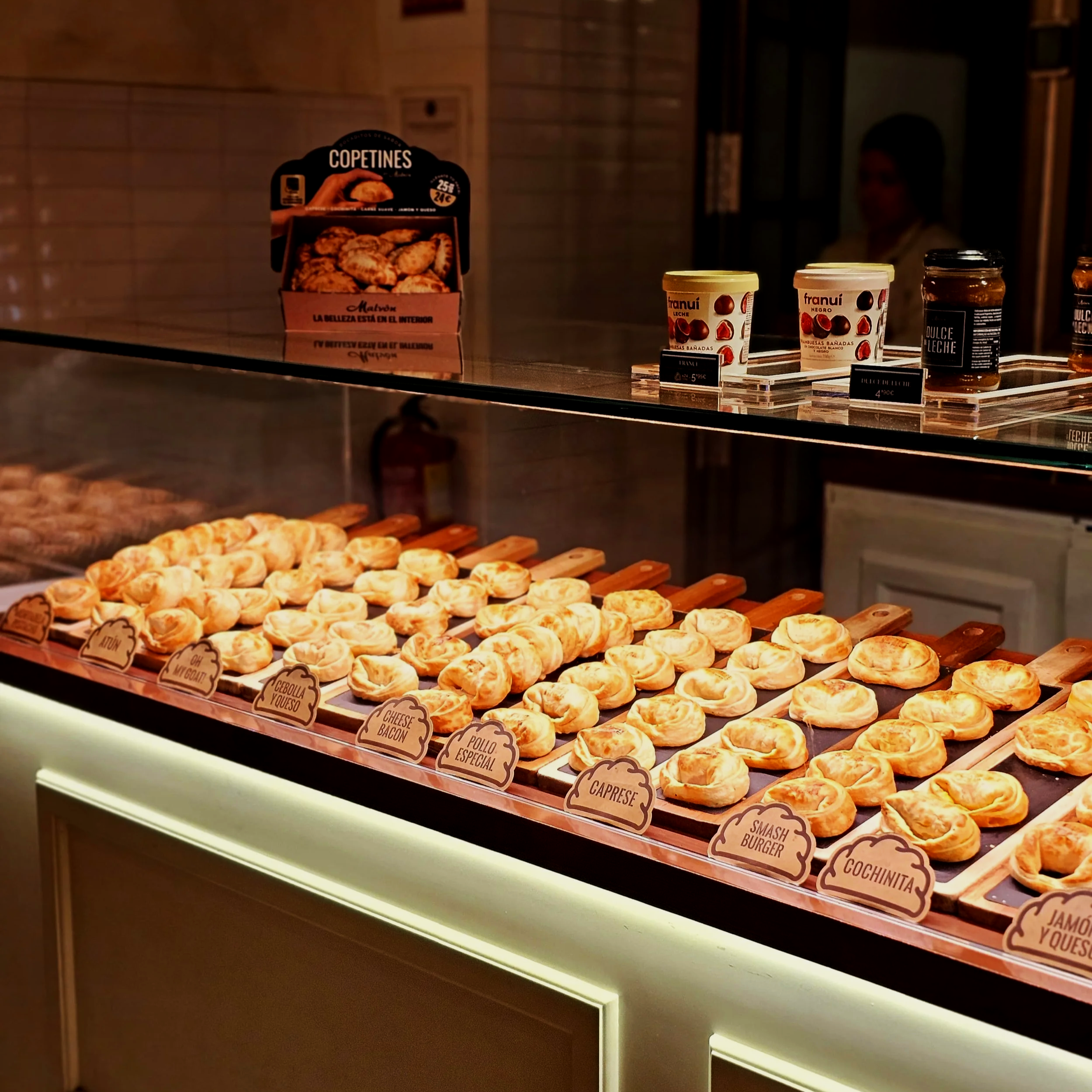
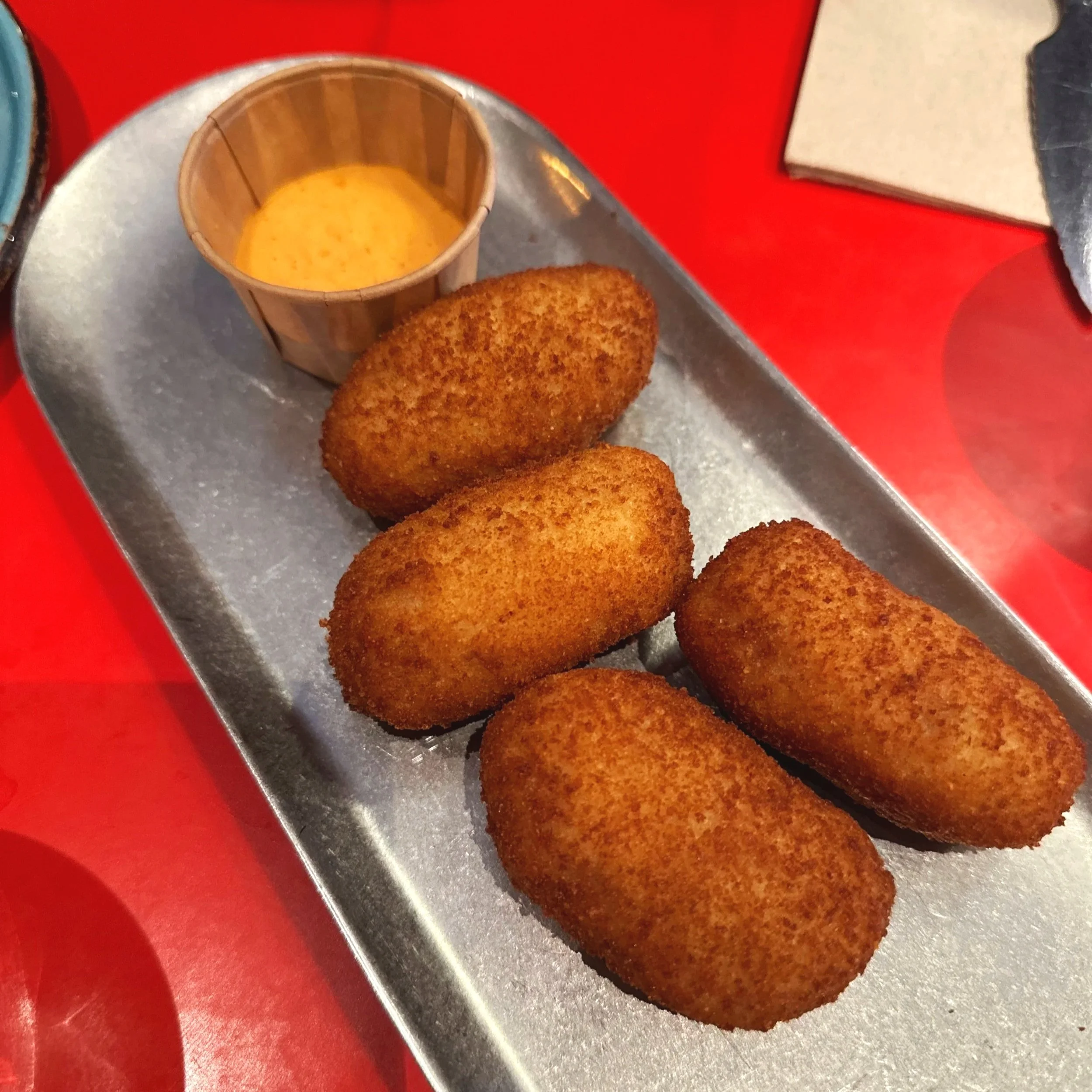
Bites worth writing home about: pan con tomate—crisp bread rubbed with ripe tomatoes, garlic, and a drizzle of olive oil, simple yet intensely flavorful; patatas bravas— fried to perfection and coated in a spicy, smoky sauce with the right kick; croquetas de jamón Ibérico—creamy on the inside with a delicate crunch on the outside; empanadas— basically little pockets of comfort with a pastry wrapped around savory fillings; and the flan pastry at Acid Coffee—silky, caramel-sweet, and perfectly balanced—highly recommend the pour overs here too. Eating in Madrid was about slowing down, savoring every flavor, and letting your stomach do some sightseeing. And of course, walking…lots of walking :)
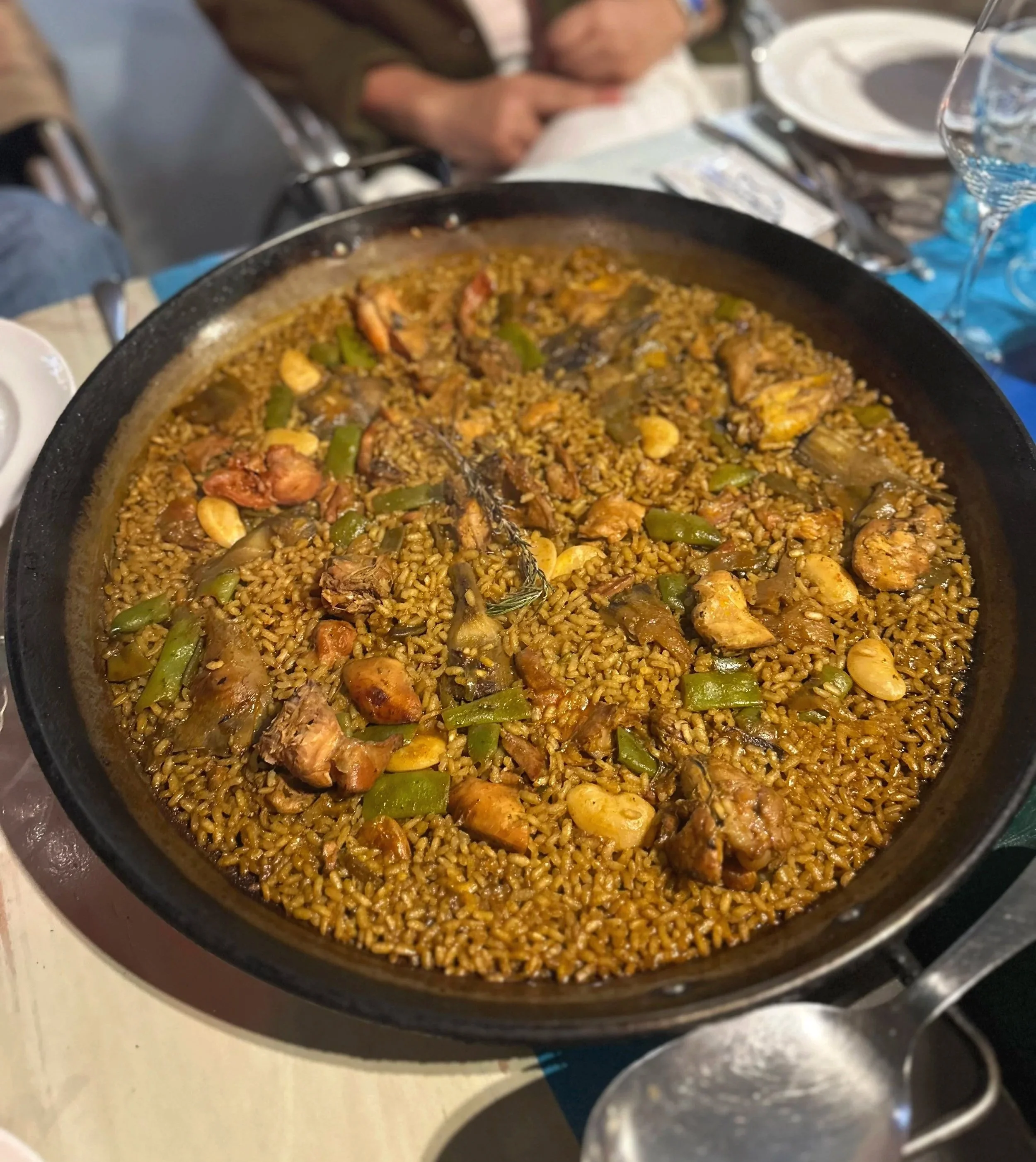
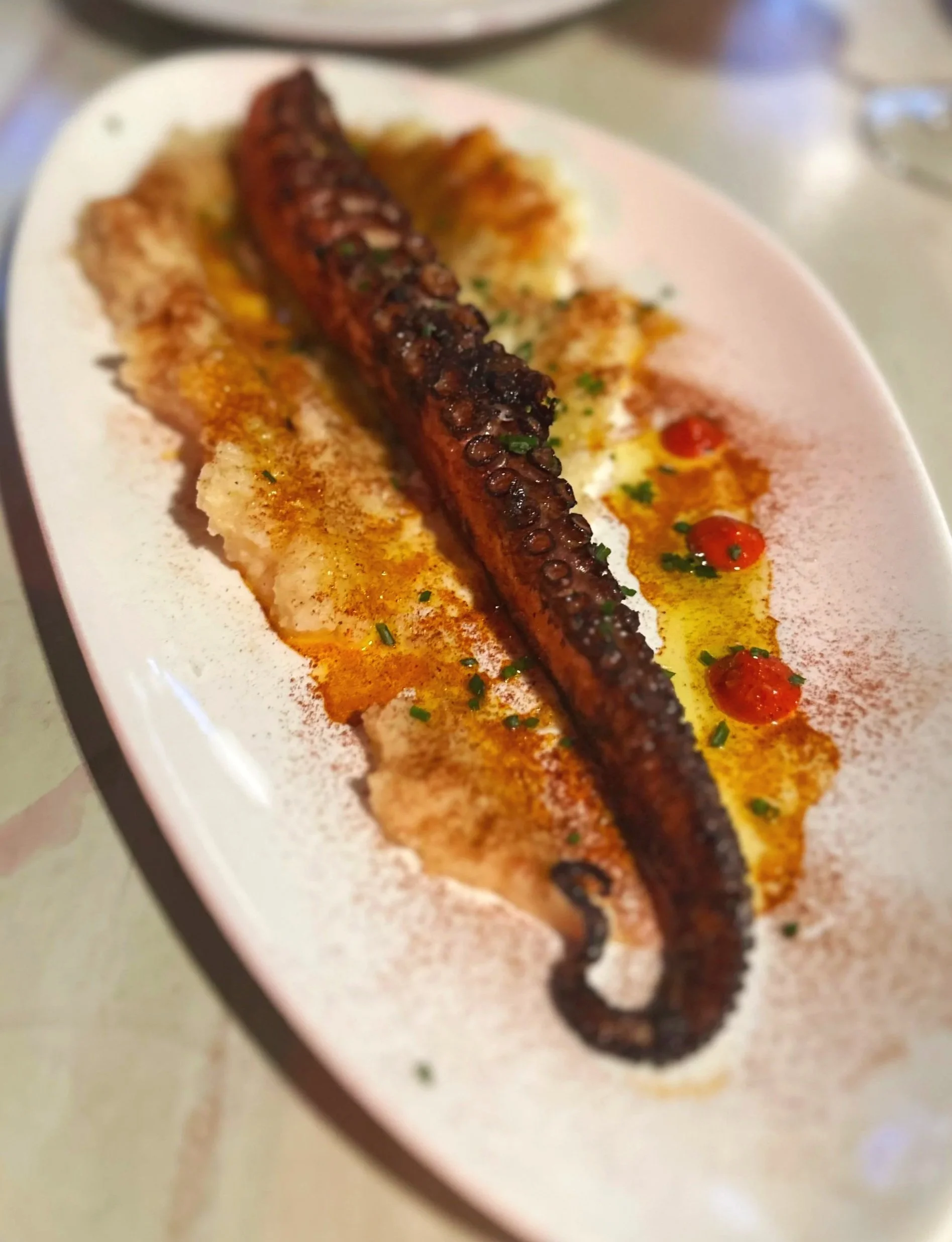
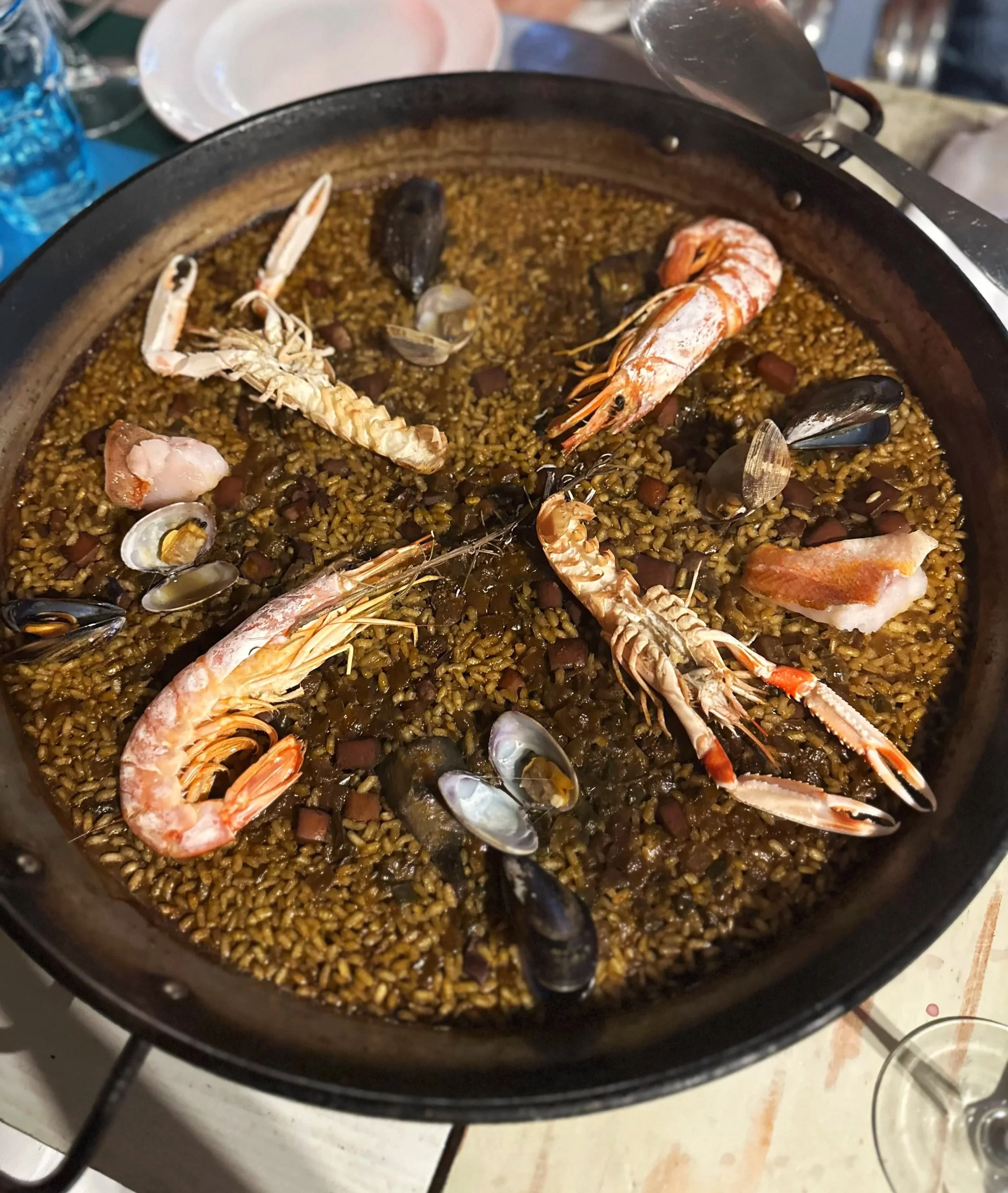
Barcelona responded back with brighter, coastal tones—and a whole lot of Catalan personality. The food here leans into fresh seafood, vibrant produce, and spices that show off Catalonia’s mix of creativity and a little rebellion. Some of my favorite dishes here came from a restaurant right off the coast called Xiringuito Escribà. There was smoky, tender grilled octopus with just enough char to bring out its sweetness, fideuá— black fideos (short, thin noodles that are lightly toasted before cooking, which gives them a nutty flavor) layered with fish, clams, and prawn, and paella Valencia, a chicken paella that somehow tasted like comfort and coastline at the same time. I paired each meal with a delicious sangria—light, not too sweet, and crispy.
My top favorite dish—one I tragically didn’t photograph because I was enjoying the present moment—was my birthday dinner at Boca Grande. Served like a paella, it featured a rich, velvety, and mouthwatering dry rice topped with perfectly charred Angus rib, smoky, tender, and unforgettable in every bite. I washed it down with a St. Germain Spritz, which added a light, festive touch and made the whole meal feel like a celebration. The evening was just as unforgettable as the venue— an elegant, dramatic, slightly decadent atmosphere. It was somewhere between a refined dining room, a vintage social club, and a stylish cocktail lounge. The downstairs bathroom even had a DJ, turning a quick pit stop into a full-blown dance interlude—because apparently, the party follows you everywhere.
Meals weren’t rushed; they unfolded slowly, the way people here actually like to eat, with wine, good conversation, and no one checking the time. I laughed the hardest here, savored the smallest details, and became a night owl, following the city’s rhythm of long dinners, shared plates, and spontaneous strolls along the lively streets. Barcelona was an experience filled with warmth, flavor, and a little Catalan mischief.

Cities Built Like Galleries
As I’ve mentioned, Madrid takes pride in it’s elegance. Its architecture leans more towards grand and stately—wide boulevards, large plazas, ornate facades, proud statues, and buildings that seem to be have been designed to both impress and represent kings and queens. The city has a kind of classic European royalty vibe with neoclassical, baroque, and renaissance revival styles. These include Plaza Mayor’s symmetrical, picture-perfect layout, La Gran Via as what I like to imagine as Madrid’s broadway lined with ornate early 20th century designs, and El Retiro as the softer and more romantic side. Even the residential buildings tend to feel traditional: iron balconies, warm-colored exteriors, and symmetrical windows. Walking through Madrid feels polished, timeless, and even a bit dramatic in the best possible way.
Madrid’s Architectural and Natural Playground
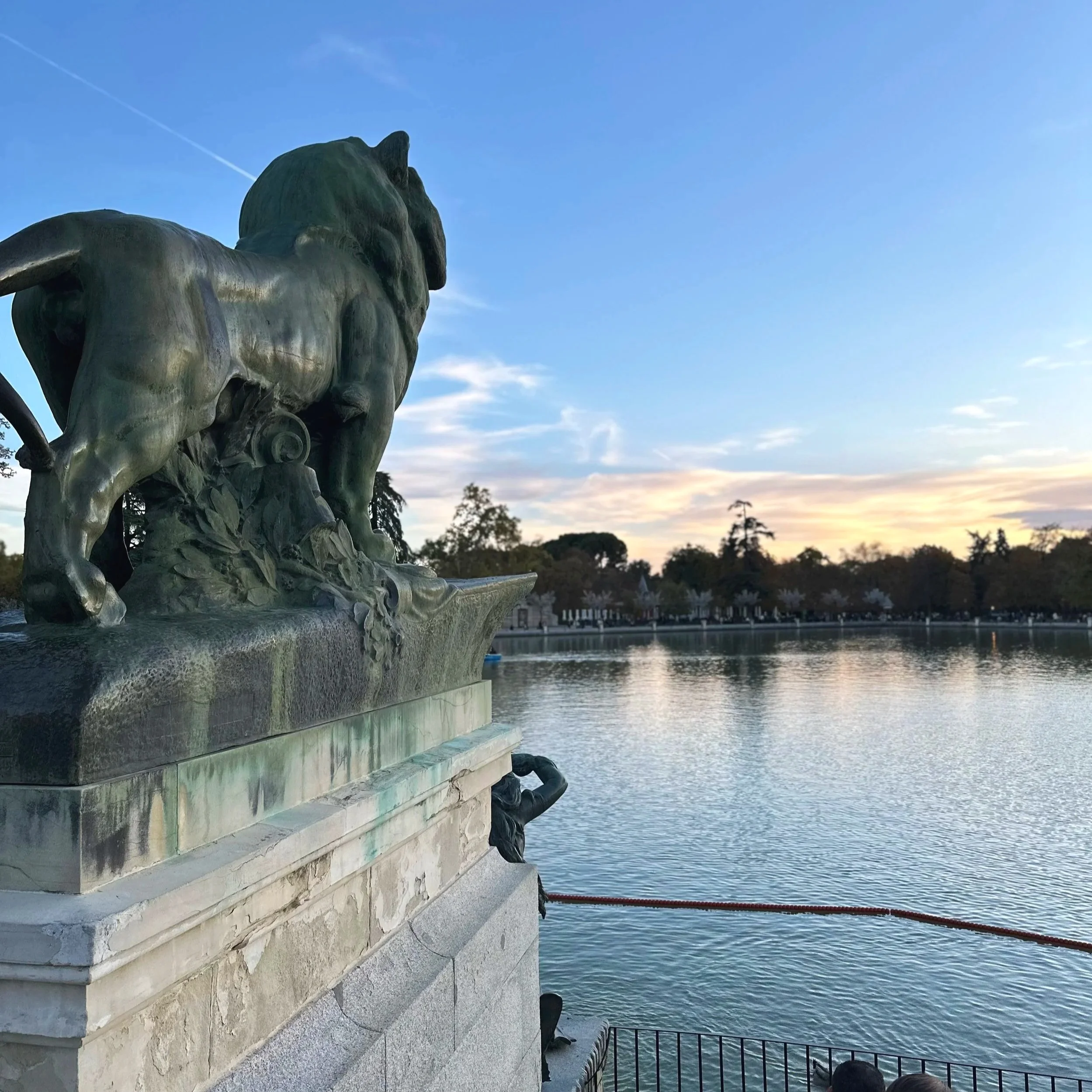
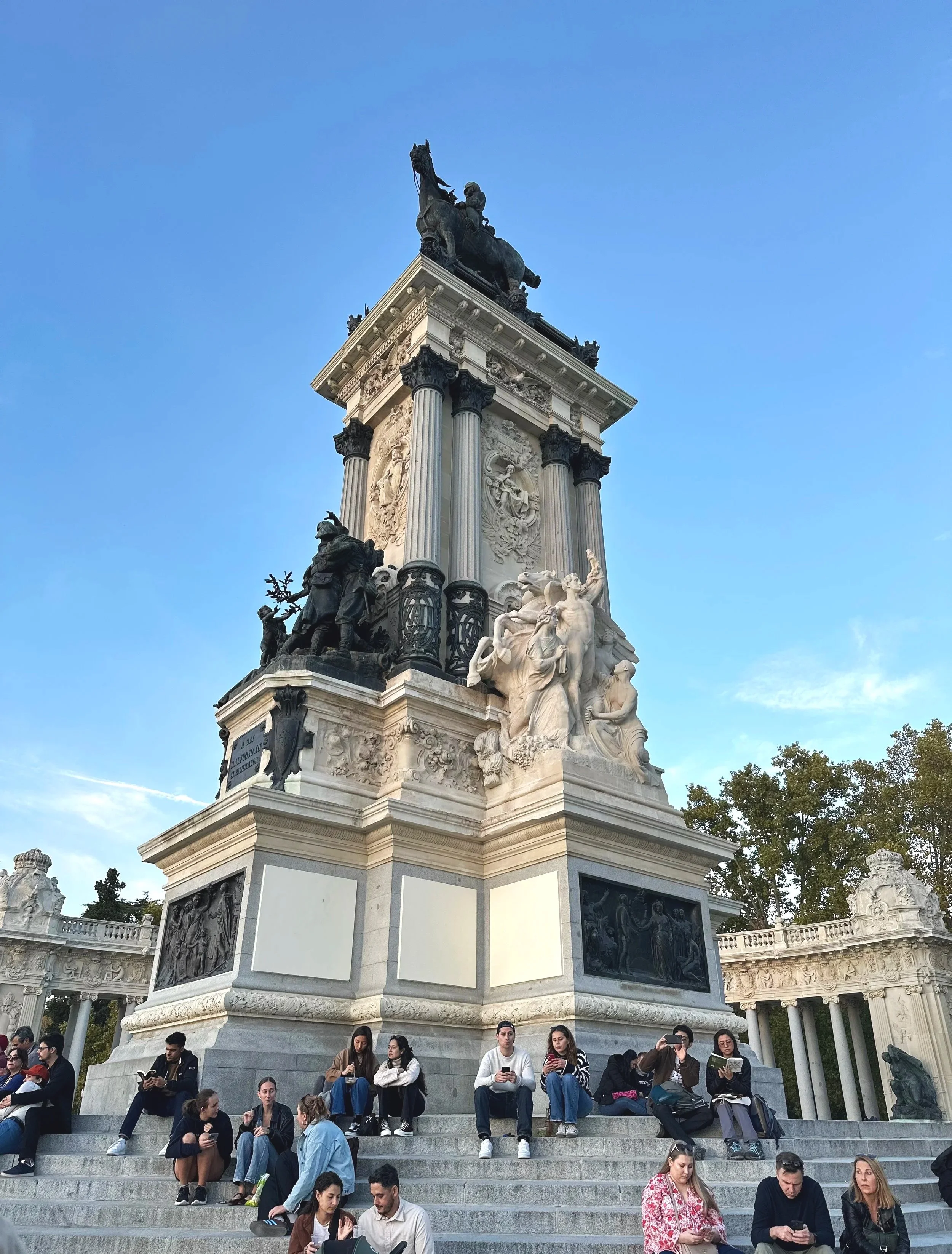
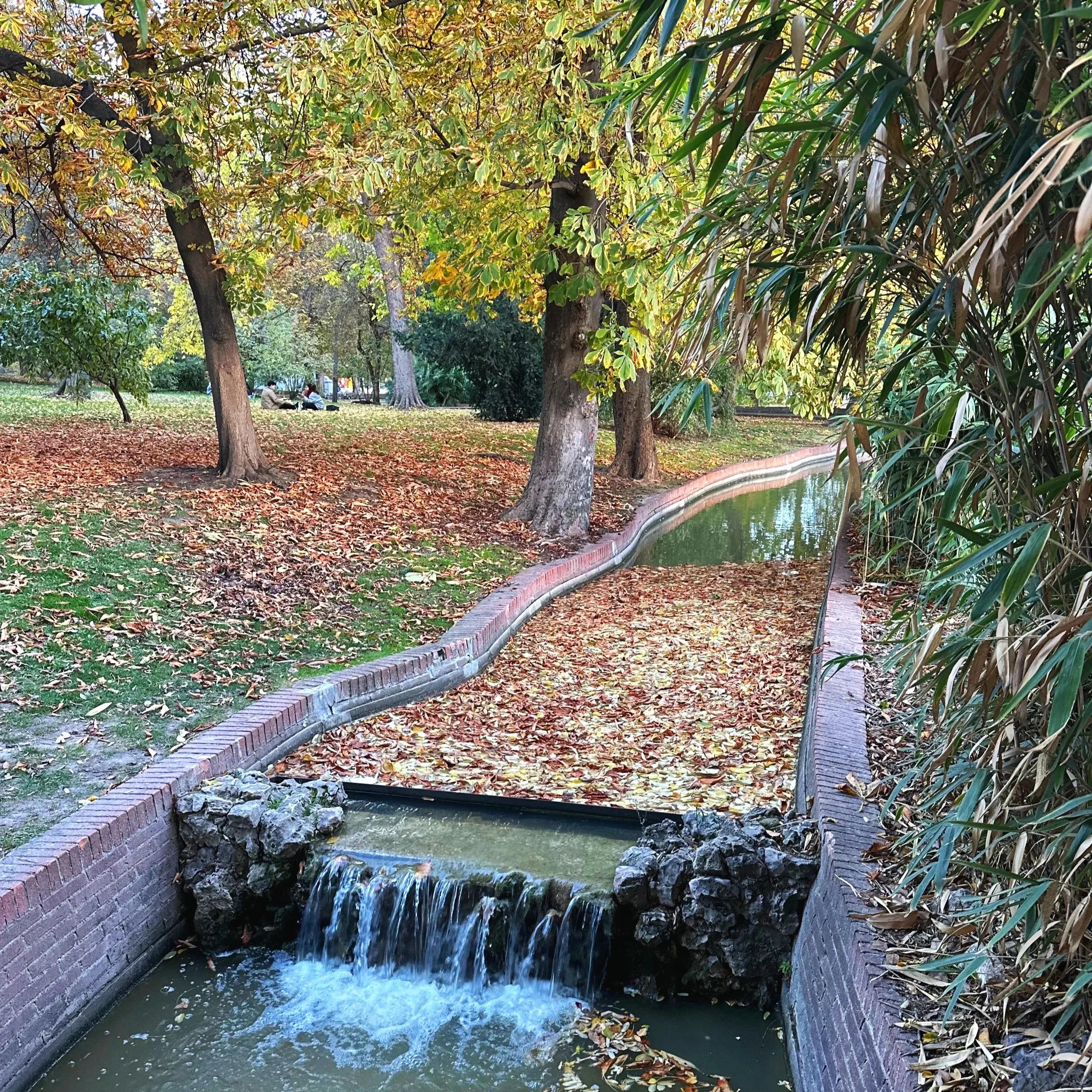
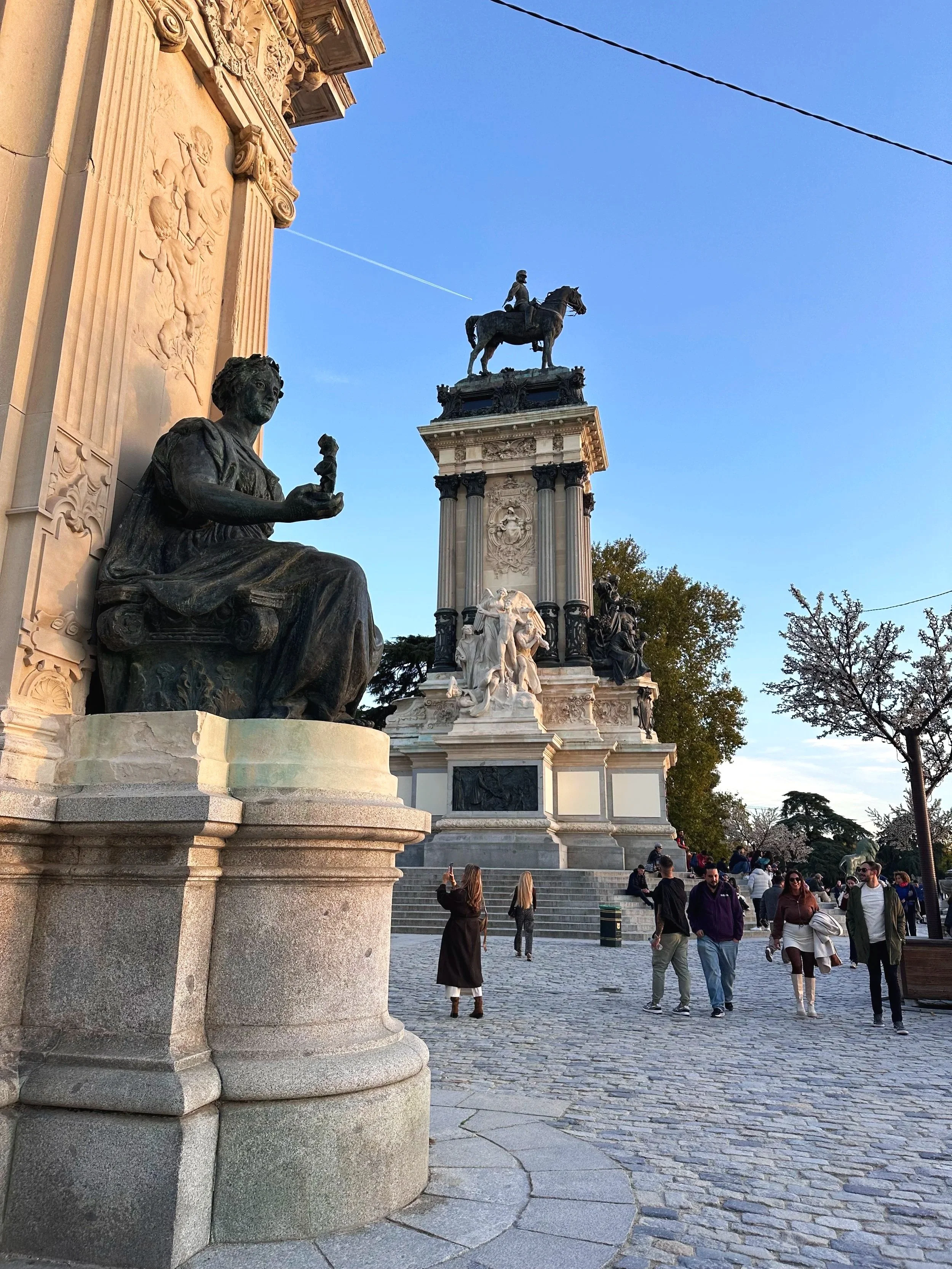
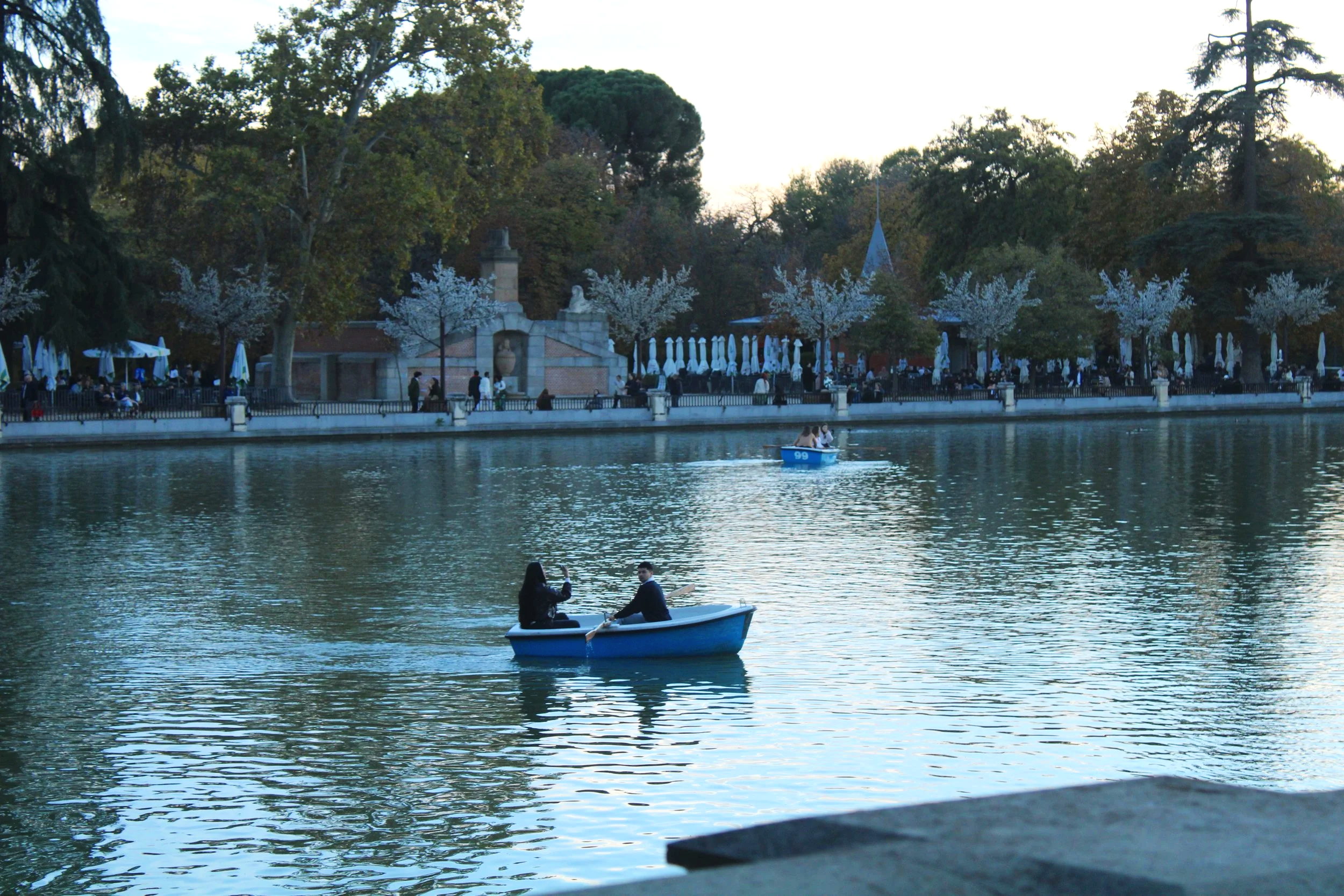
El Retiro was the first and probably one of my favorite spots to explore in Madrid. Getting lost in the green space is breathtaking, but what really caught my eye was how the park’s architecture reflects the city itself. The fountains, statues, and little pavilions feel like mini versions of Madrid’s plazas and historic buildings, full of detail and personality. Tree-lined paths, open lawns, and tucked-away corners show the same mix of order and creativity you see around the city—from the elegant boulevards downtown to the hidden squares in older neighborhoods. Elements like the central pond with rowboats, quiet nooks under leafy canopies, and people hanging out, all reinforce the city’s culture of blending everyday life with moments of beauty and community. It’s grand without feeling intimidating, artistic and communal. El Retiro is the city’s architectural exhale—sometimes grand, sometimes playful, but always magical.
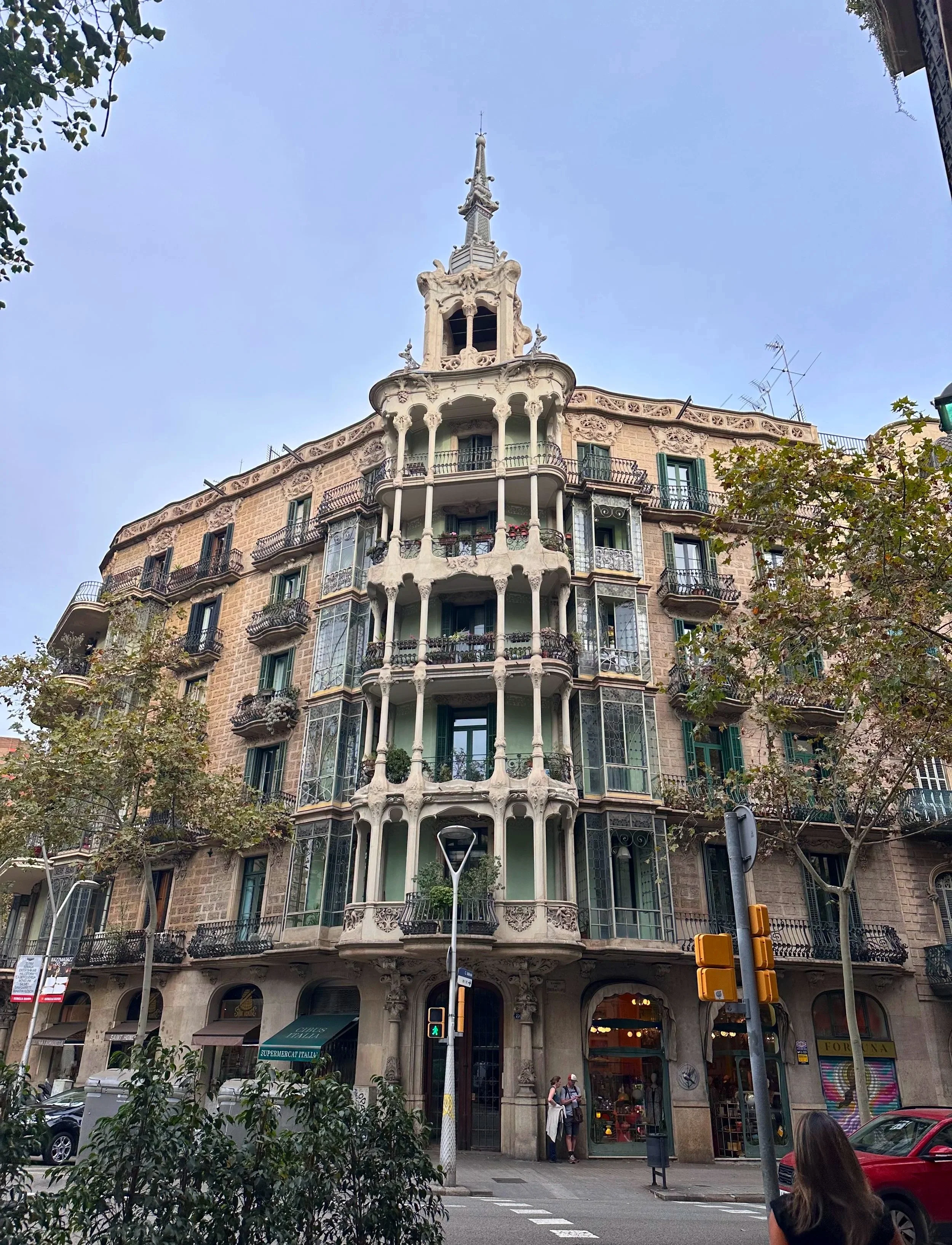
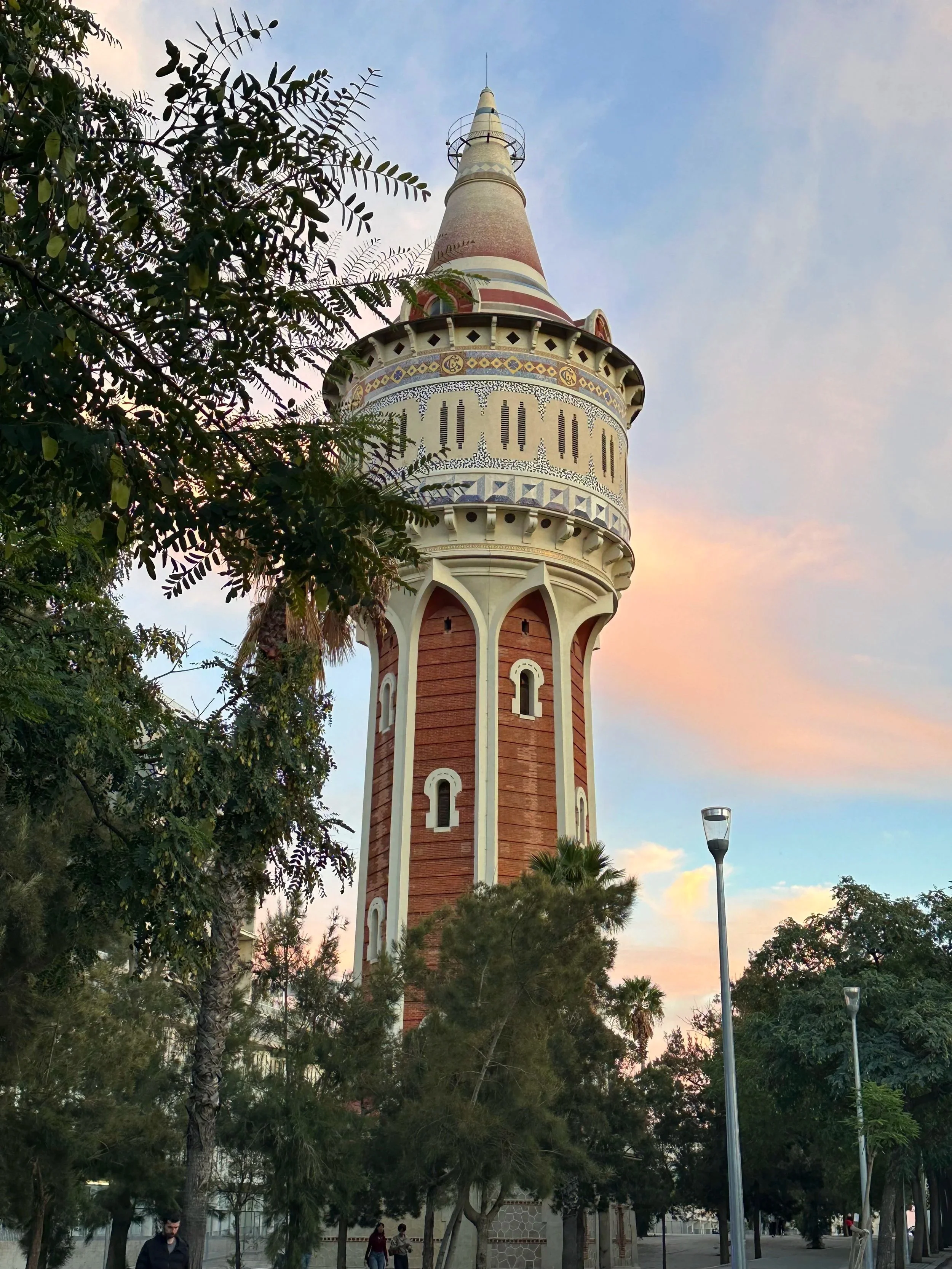
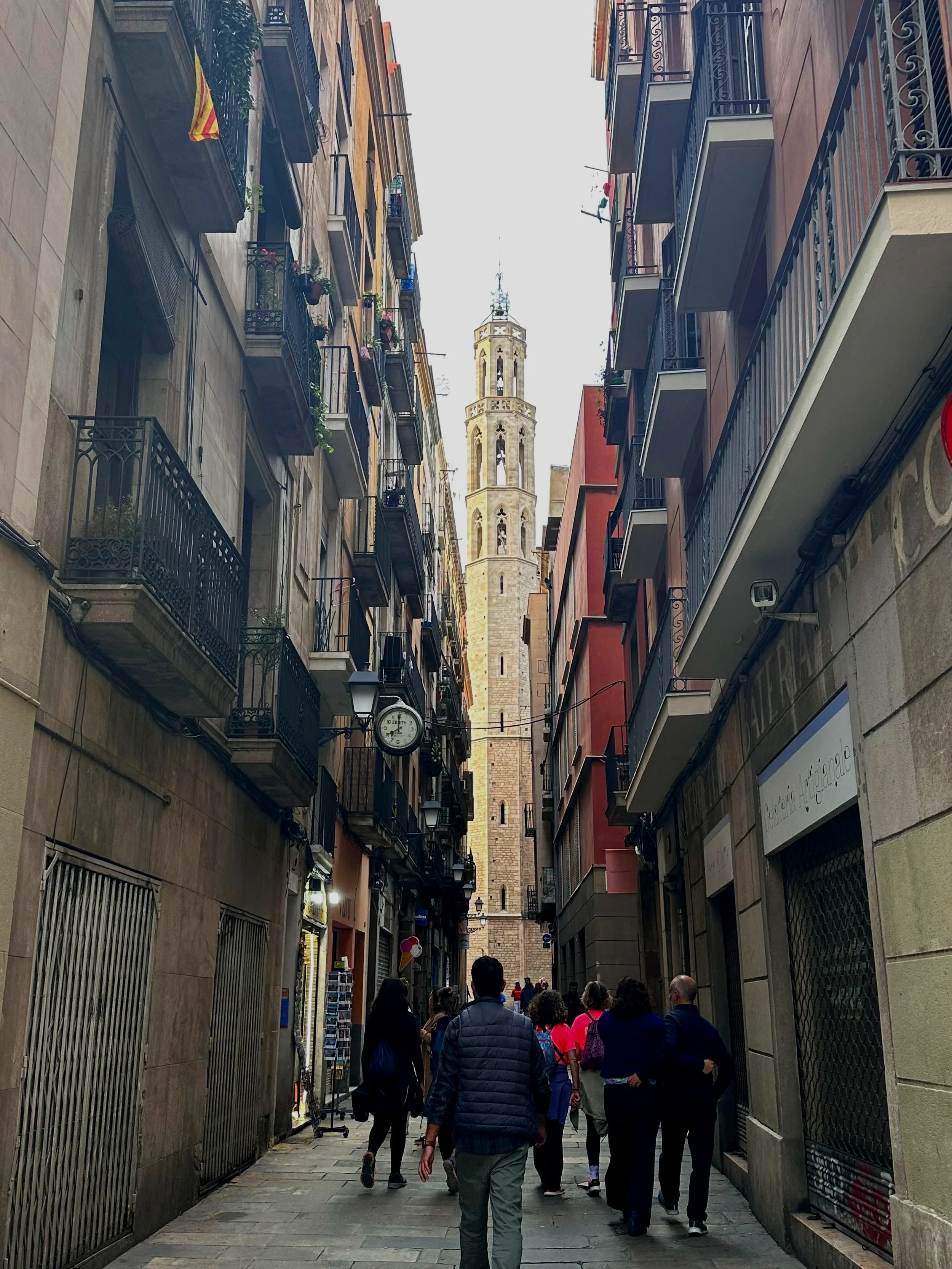
Barcelona on the other hand is the creative sibling who shows up in bold colors and refuses to blend in. The architecture here is playful, imaginative, and wonderfully weird. Gaudí’s fingerprints are all over the city, from the organic shapes and mosaics of Casa Batlló (or Casa de Ossos) to the dreamlike towers of La Sagrada Família. Even the everyday buildings feel expressive and versatile— Gothic medieval alleys in between the modernist and whimsical structures. The city basks itself in the Catalonian way— to be unconventional even in it’s architectural style by deciding centuries ago that straight lines were optional.

Casa Batlló: Gaudí’s “House of Bones” and the Building That Forgot How to Be Normal
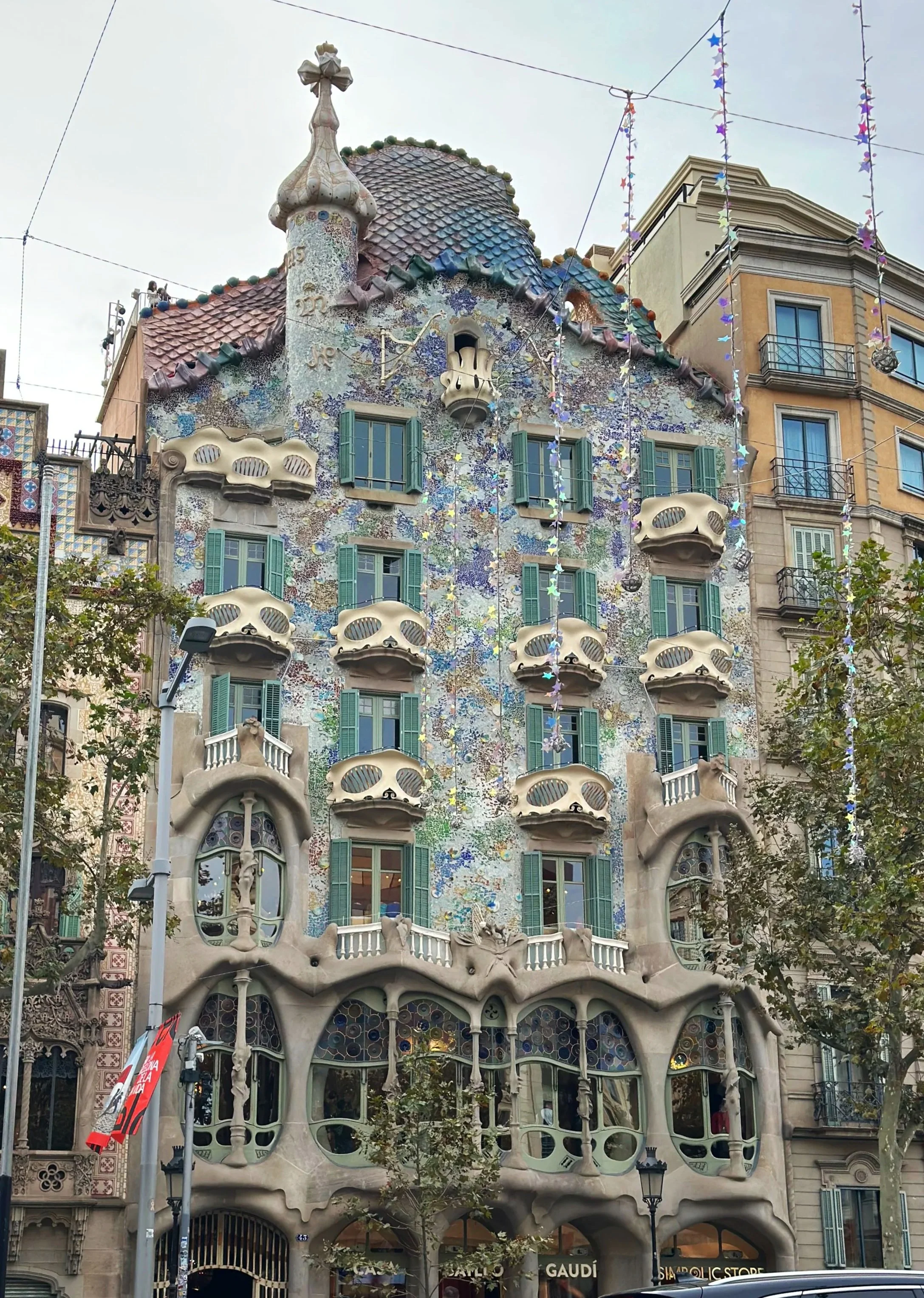
“There are no straight lines or sharp corners in nature. Therefore, buildings must have no straight lines or sharp corners.”- Gaudi
Barcelona’s signature styles include Art Nouveau elements which had been introduced in the late 19th century. One highlighted feature of this art form are curved compositions with colorful mosaics, a pattern Gaudi took and ran with in his work. His design clearly reflect why Casa Batlló feels so organic, surreal, and “alive” — its curves, flowing shapes, mosaics, and nature-inspired details all follow from Gaudí’s belief that architecture should mirror natural forms.
Casa Batlló is one of those buildings that makes you stop mid-walk and ask yourself, “Is that allowed?” Gaudí basically took a regular apartment building and brought it to life— full of curves, colors, and details that feel more natural than architectural. They call it the House of Bones for a reason: the façade looks skeletal. The balconies resemble skulls, the columns arc like bones, and the windows feel like they’re part of some creature rather than a building. It’s architectural anatomy is organized in the most captivating and strangest way possible.
The whole thing is made up of swirly shapes with no straight lines or sharp angles. The building shimmers with trencadís (Gaudí’s signature broken-tile mosaic), so the building changes with the light like fish scales. I wasn’t able to visit the inside (just an excuse for another trip), but I’ve heard it’s another whimsical design that feels like walking through the inside of a fantasy novel—curved wooden doorways, flowing lines, and carved details that look like a creature’s rib cage. Basically everything I love from a Guillermo del Toro film or J.R Tolkien’s novels.
To put it poetically, Gaudí didn’t design a house. He designed a living, breathing art piece that just so happens to have an address on it.
La Sagrada Família: The Cathedral That’s Still Making Up Its Mind
La Sagrada Família is a full-blown architectural saga. One of Gaudí’s masterpieces is a cathedral given permission to dream differently than any other cathedrals I’ve visited so far. Similar to Casa Batlló, its carefully planned designs bring out its color, contours, and wild ideas— and it’s been doing exactly that for over a century (since 1882). It’s still unfinished, which just adds to its mystique and makes it more of a creation that sparks the imagination to keep going.
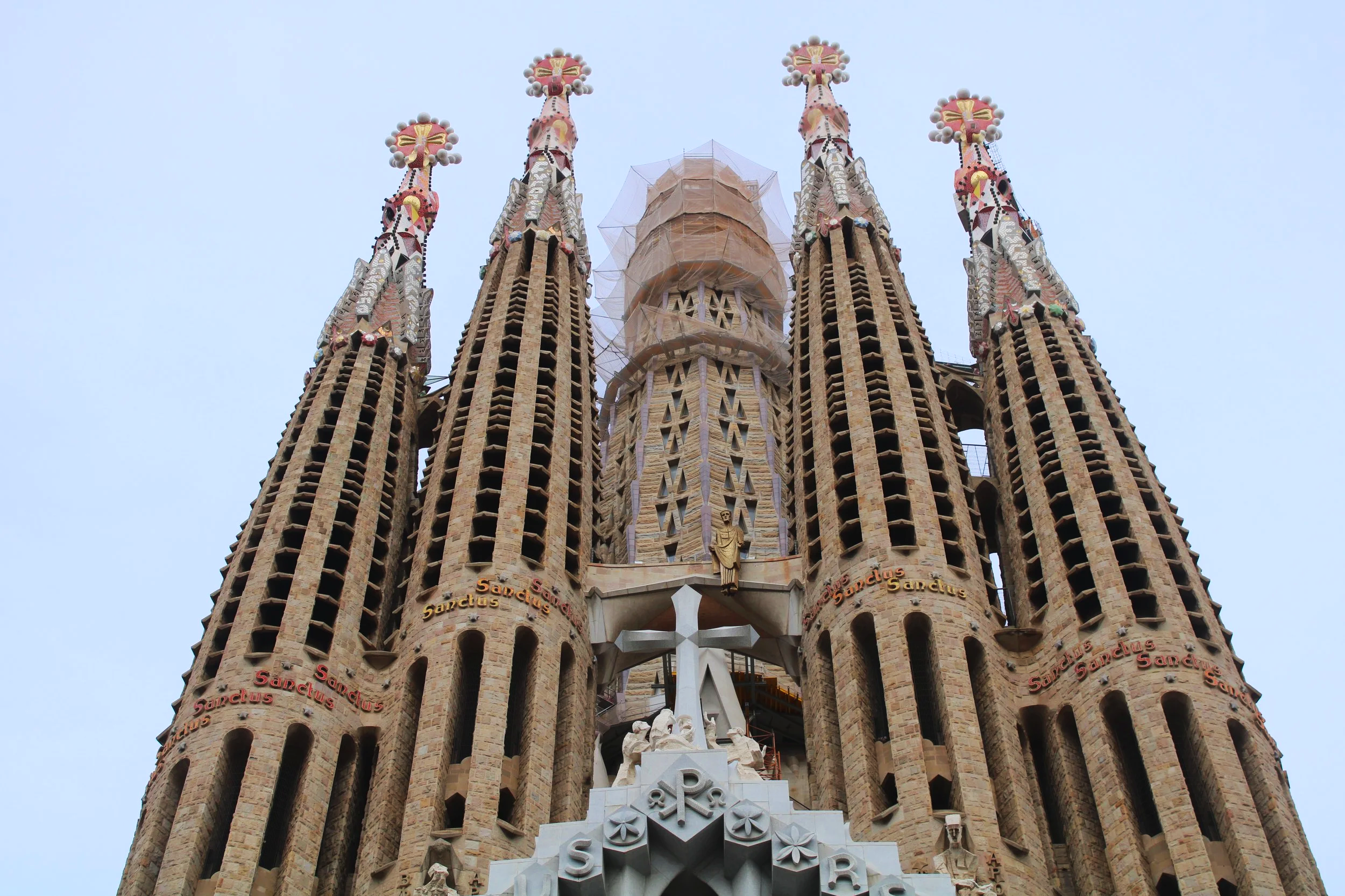
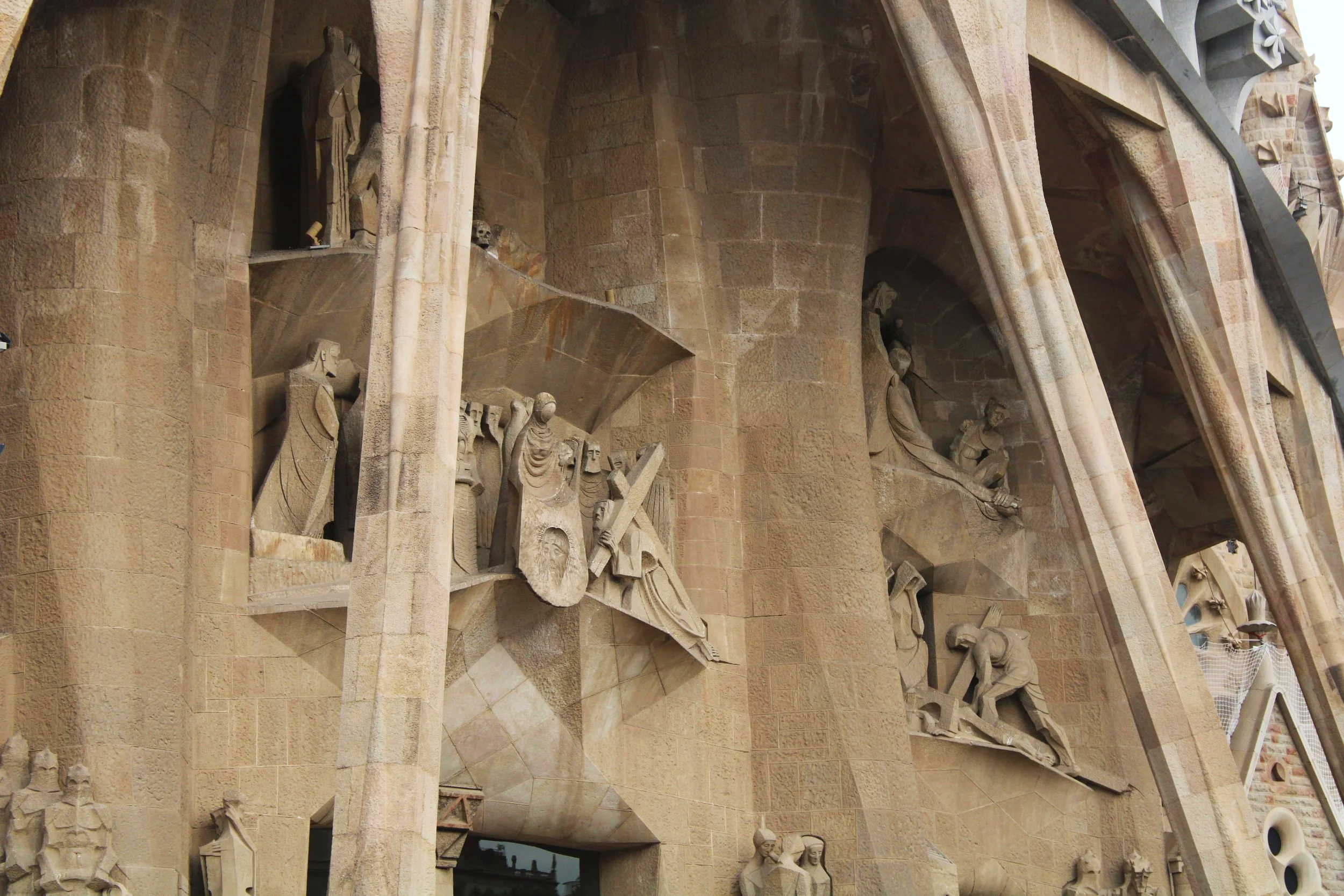
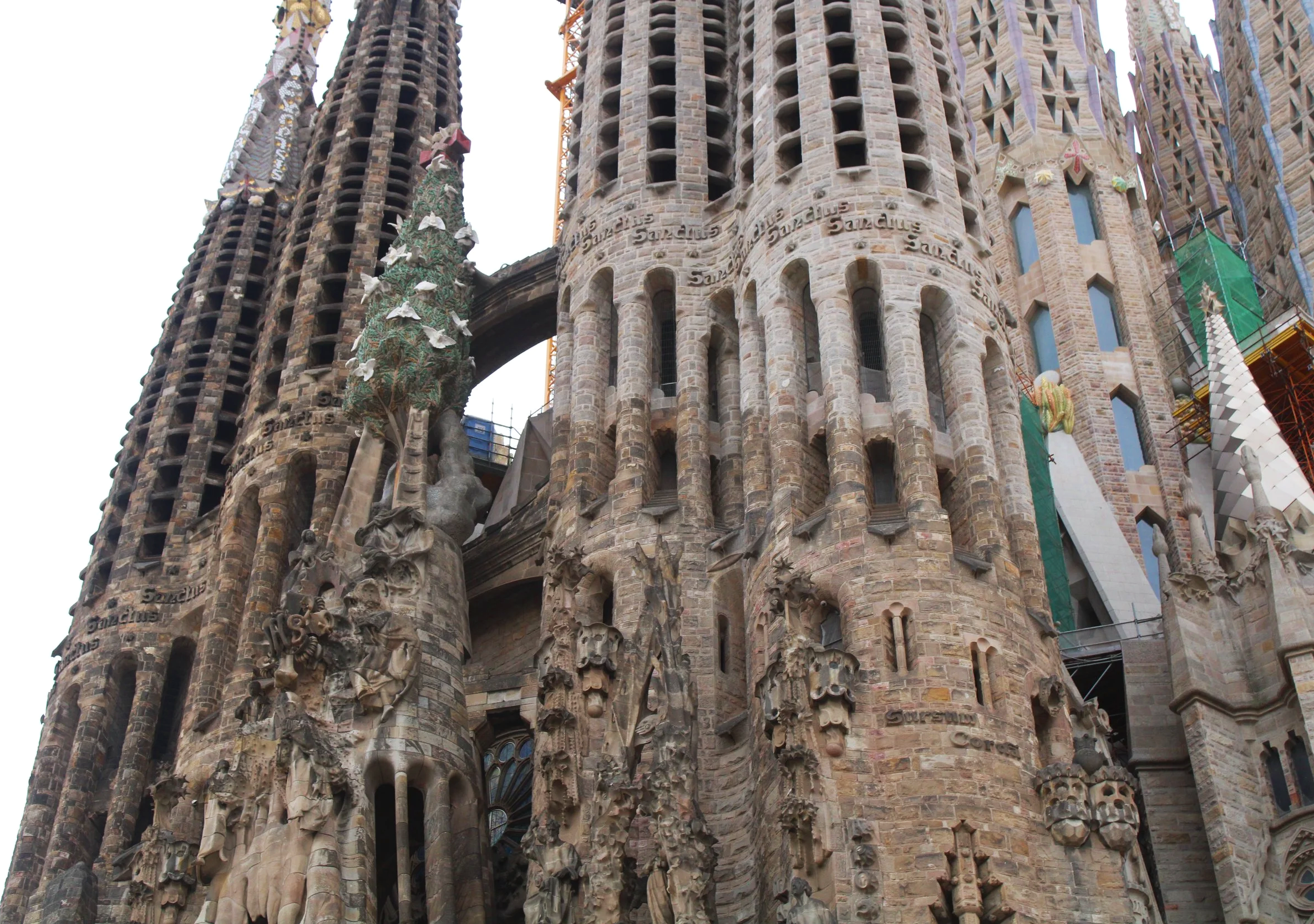
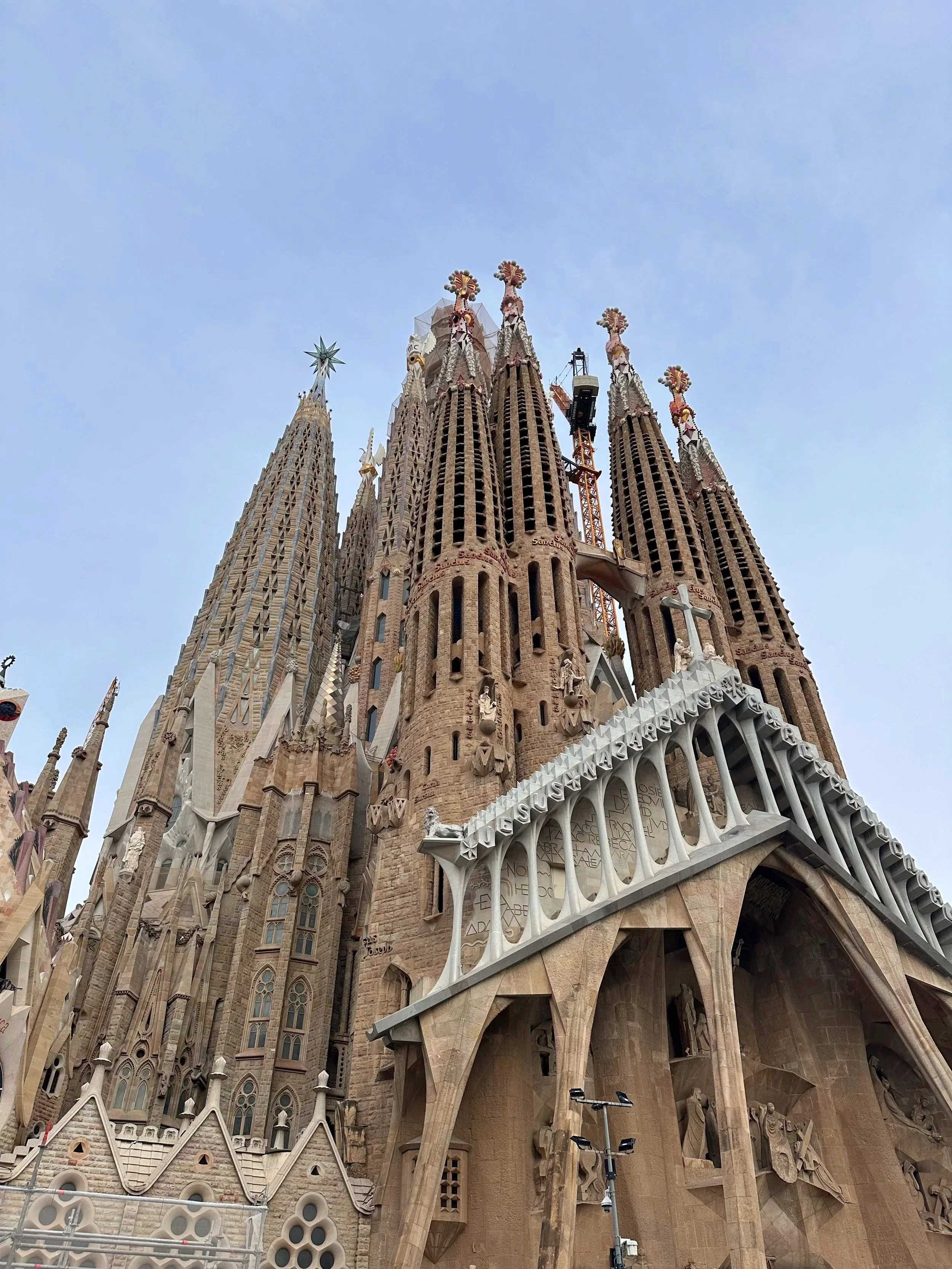
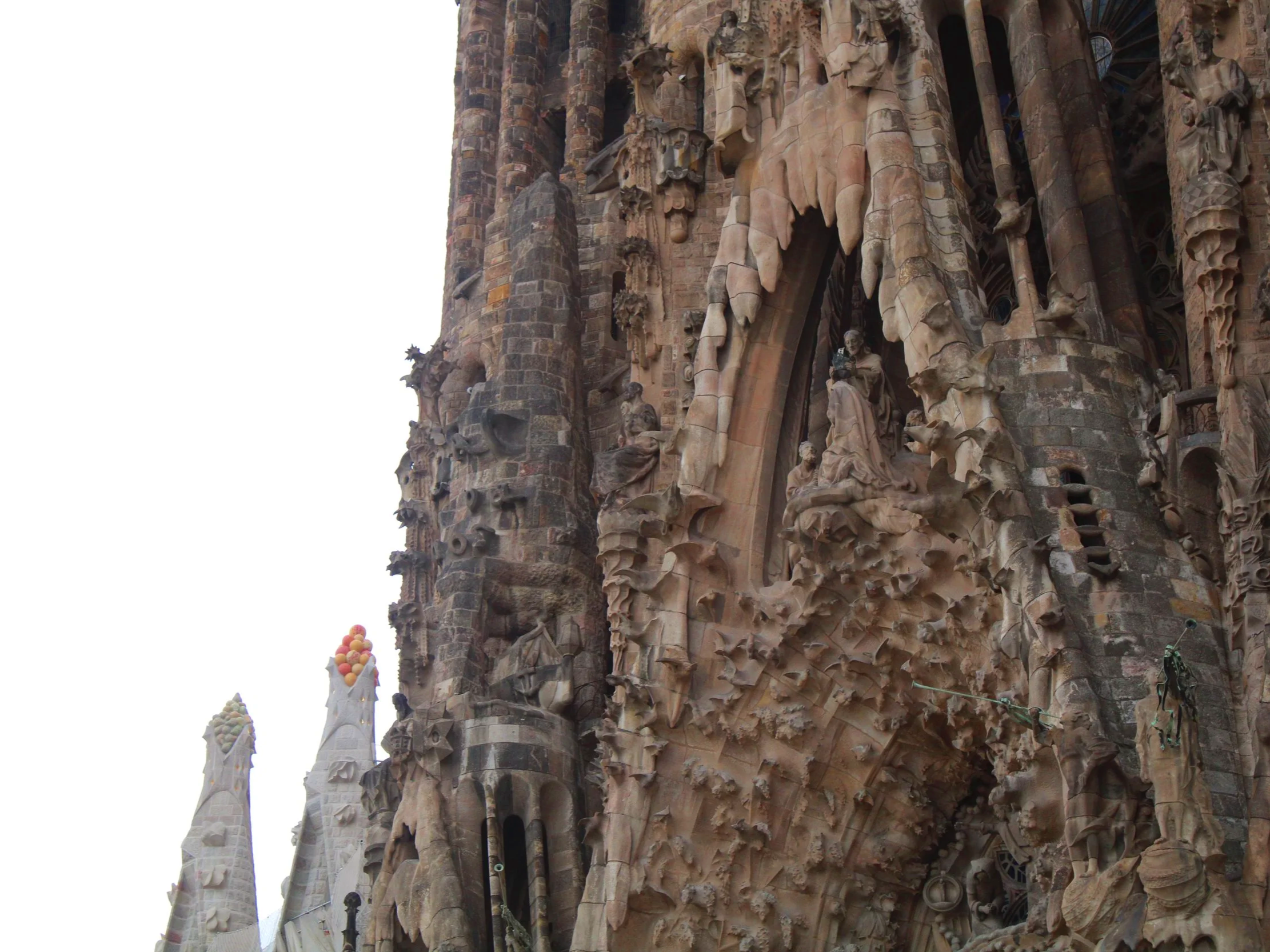
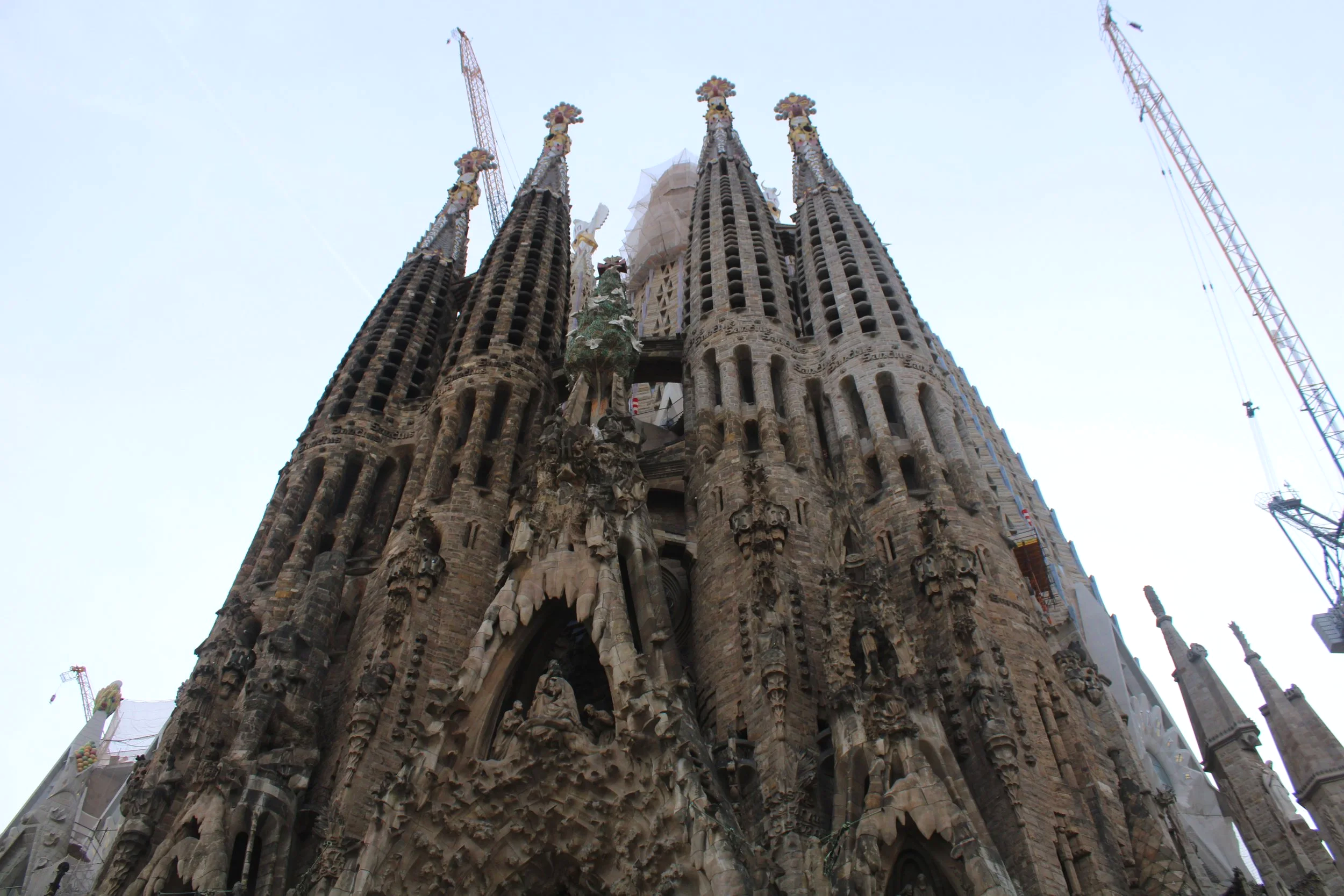
Alas, I wasn’t able to get to see the interior of this structure either. But based on the outside I can only imagine how incredible it looks. For this trip, I can only describe the exterior as a mix of Gothic drama and Gaudí’s nature-inspired surrealism. Each side of the building tells a different story. One side is detailed with the stone itself growing vines, animals, and biblical scenes. Another is stark, angular, and modern, as if another architect just dropped in from the future to add their own twist. And the newest sections look so intricate and ambitious it’s like the building is trying to outdo itself. The spires also rise like a sandcastle and a mountain range—tall, textured, and spares absolutely no detail. They practically point towards the sky and grow into it, looking infinite from below.
In the end, La Sagrada Família is a place where architecture stops being a “building” and starts being an experience—bizarre, breathtaking, and ever evolving taking on new shapes.
Classic Masters & Modern Rebels
Getting to experience the art scene in both cities was a real treat. The Prado in Madrid feels classic, full of centuries of history. Here, I found myself absorbed by Goya and Velázquez, two moody artists who paint in such different worlds. On the other hand, the Picasso Museum in Barcelona has this youthful, experimental energy that pulls you in another direction. Seeing his early sketches and evolving style added a whole new layer of understanding everything I’d learned about his work altogether. Both museums made it feel like I was seeing the country’s creativity rooted in both tradition and reinvention.
Royal Portraits and Nightmares at the Prado
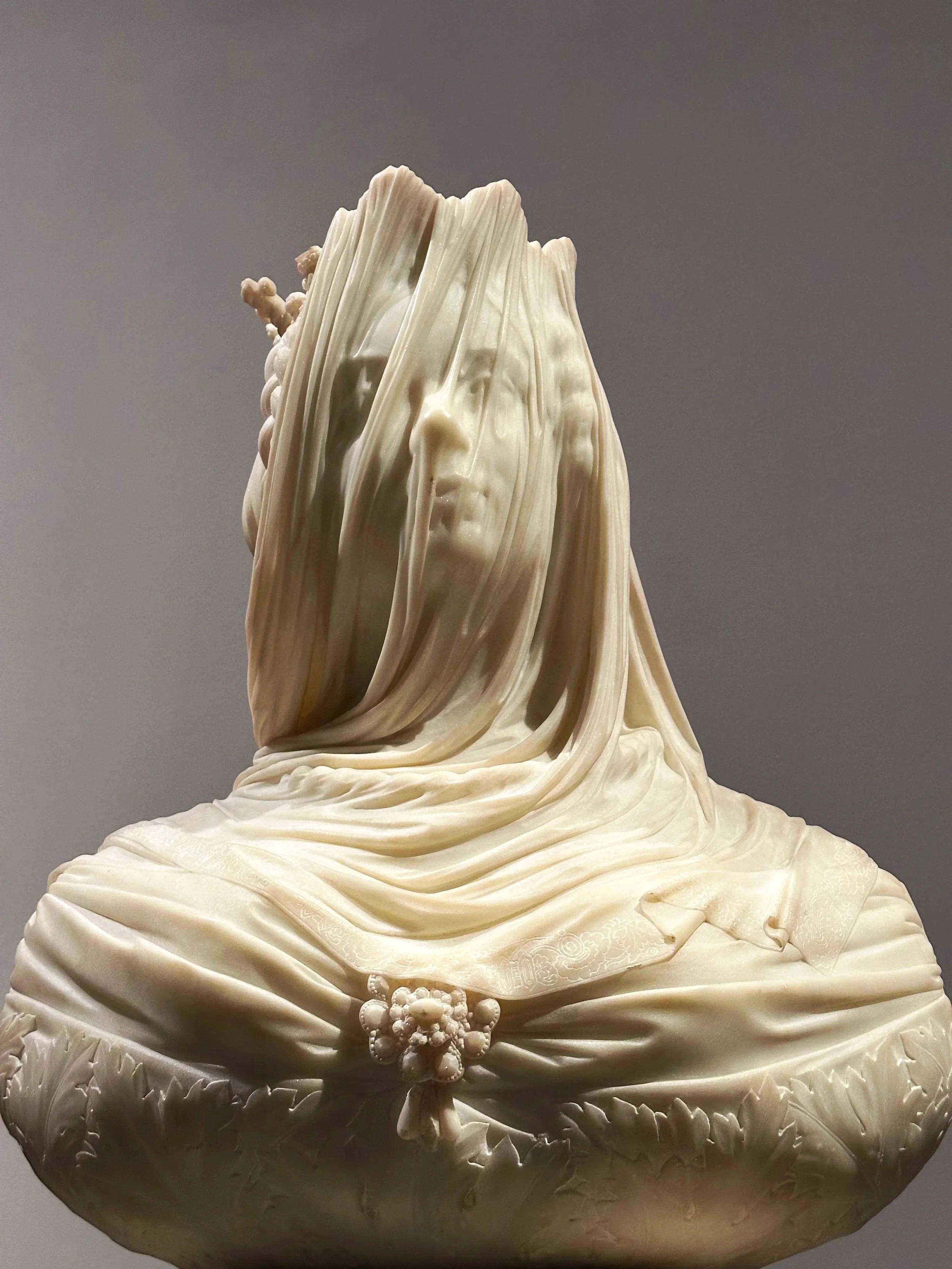
Walking through the Prado felt like unfolding Spain’s past. The rooms are majestic but quiet, and the art is weighted in great detail that make you want to slow down and study each paintings expression in every brushstroke, color, and lines. I found out about 15 minutes into my visit that no pictures were permitted, so I’ll do my best here to give a description of some of my favorite works.
Velázquez’s Las Meninas is so dramatic and massive it practically claims its own corner of a room in the museum—yet somehow its composition makes all that grandeur worth it. Painted in 1656, Las Meninas is a layered scene with multiple figures: a mirror reflecting the king and queen, and the painter himself at his easel. The perspective from this does feel like a family portrait you accidentally walked in on. Up close, his strokes look like dabs here and there, but from a distance they make a vivid, realistic scene with bright whites, deep shadows, soft skin tones. In short, Las Meninas is an elegant painting and one that provides a clever perspective as if it’s pulling you right into the royal scene.
Then there’s Goya’s work, where it goes from glittering courts and powdered wigs to the Black Paintings staring into your soul. The colors are pretty muted— earth tones, blacks, and greys, where sometimes only the flesh or blood stands out. We can say it’s just as intense as Velázquez, but much more disturbing and private. The brushwork here is loose, thick, and expressive, and the forms are distorted, nightmarish, reflecting emotional rawness. Seeing classic pieces like Saturn Devouring His Son up close is a whole experience on its own— haunting, unforgettable, and the ultimate cautionary tale about family drama of a god so paranoid of being overthrown by his own kids he literally eats them. Goya’s version conveys primal violence, horrifying scenes, and a level of mercilessness that doesn’t come with a warning label.
In neighboring rooms of the same museum, Velázquez and Goya demonstrate how Spanish art spans centuries in exploring both human grace through lightness and refined realism, and confronting the darker depths of the soul.
Picasso’s Barcelona: From Sketches to Masterpieces
Stepping away from Madrid’s royal scene and emotional depth, Barcelona houses the Picasso Museum where the mood feels younger, looser, and a little more daring. It takes you right into Picasso’s early years—the sketches, the experiments, the versions of himself he tried on before becoming the Picasso the world knows today.
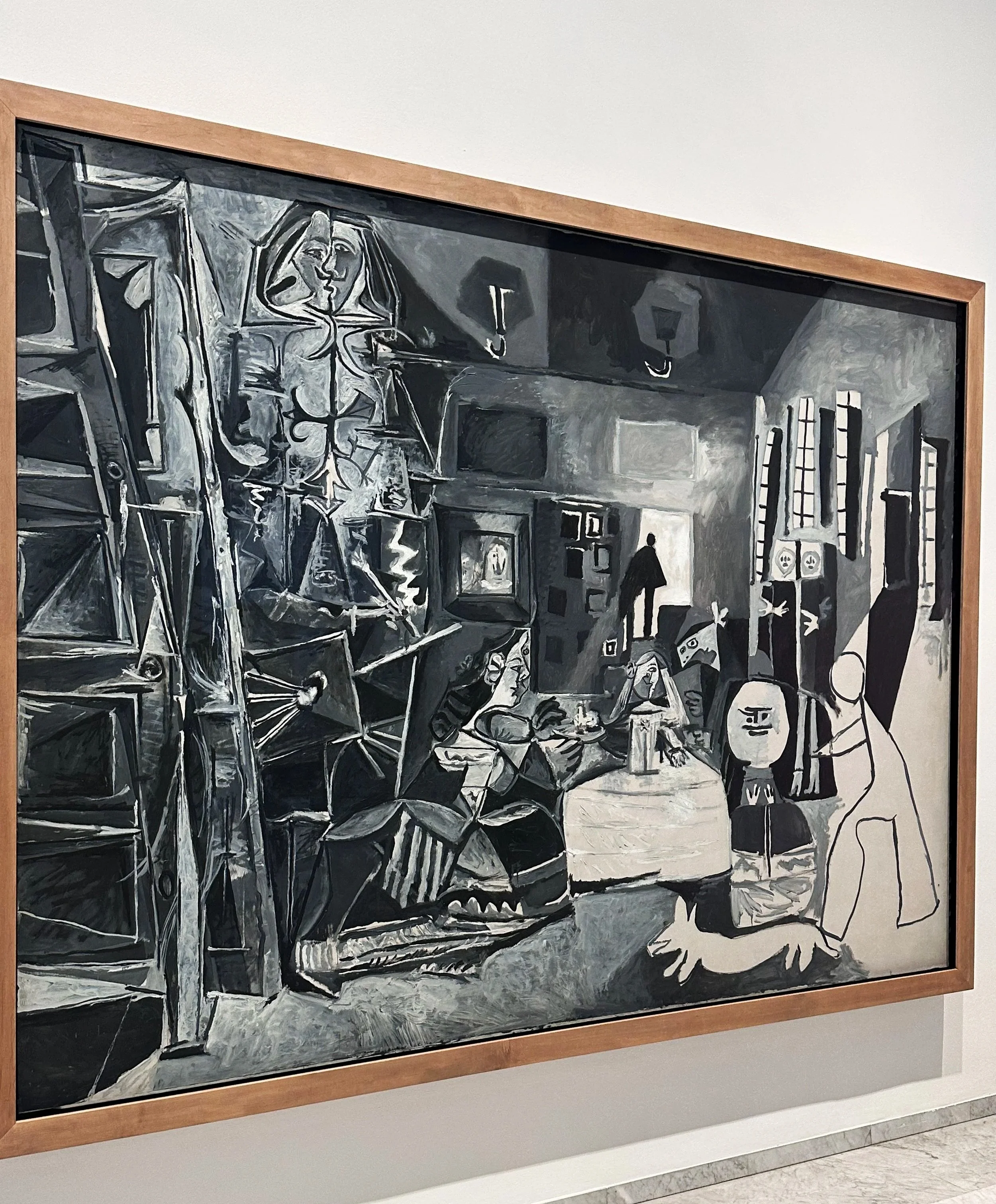
In one of his reinterpretative works, Picasso invites us to revisit Velázquez’s Las Meninas (on the left), where he deconstructs this masterpiece into playful, abstract shapes and perspectives. He rearranges the composition, abstracting the characters, shifting focus, and turning the princess, servants, and even Velázquez himself into ghostlike forms. The effect is striking: it’s both a tribute and a reinvention, a conversation between centuries that feels modern, experimental, and entirely him.
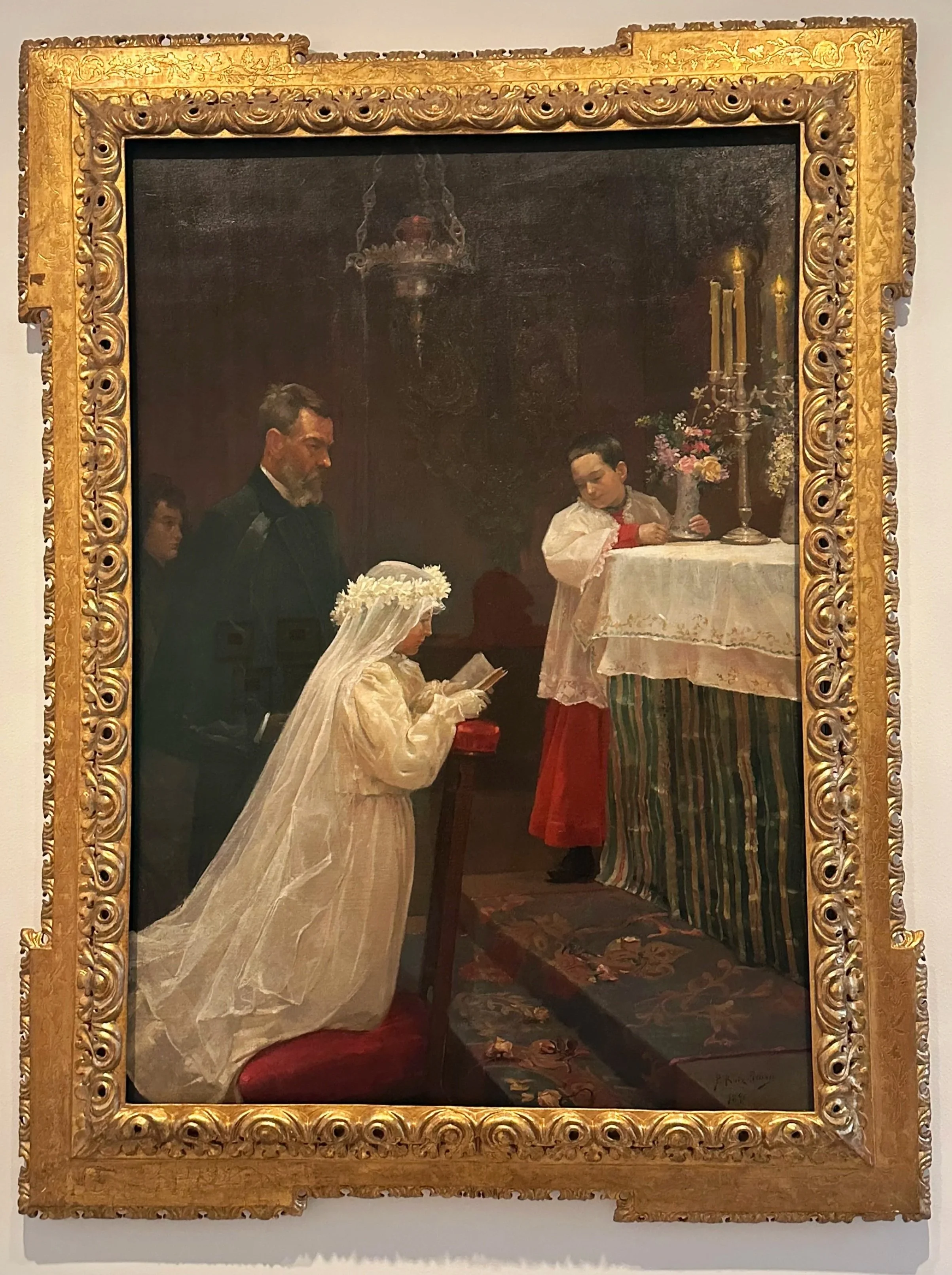
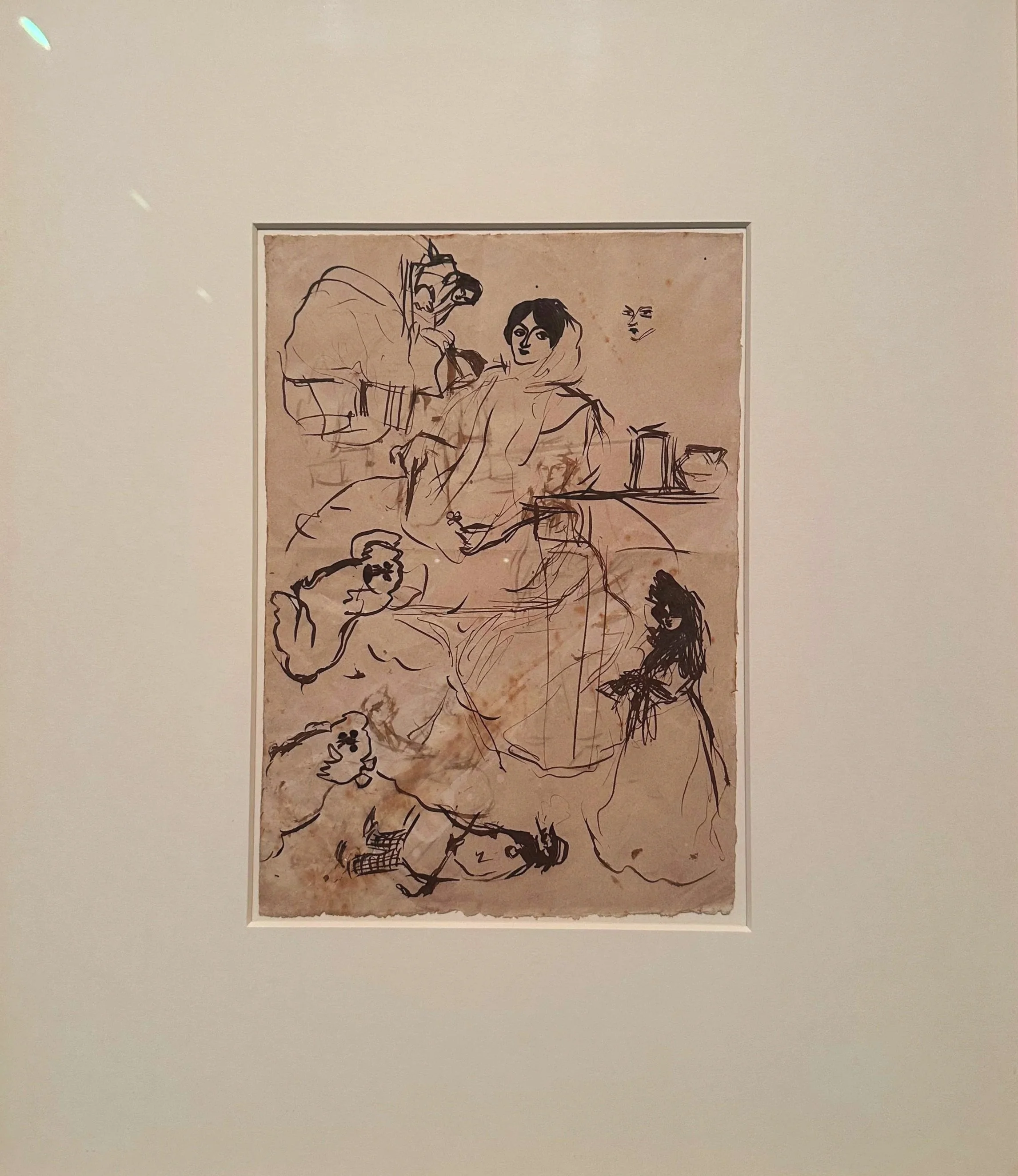
There’s something fun about seeing his sketches up close. It feels like reading through his old notebooks, tracing his thoughts, and watching him unfold as the shape-shifting artist throughout his life. The collection shows the enormous jump from a classical trained prodigy to the bold, inventive style he’s known for, and it almost feels like Barcelona egged him on the whole way. As you move from room to room, the styles keep changing, as if he refused to repeat himself even out of spite. Each composition feels like an entirely new idea, a reminder that art—much like Picasso’s personality—is in a constant state of evolution. Compared to the Prado’s solemn, historic energy, the Picasso Museum feels like being let into an artist’s workshop, watching him figure out who he wants to be.
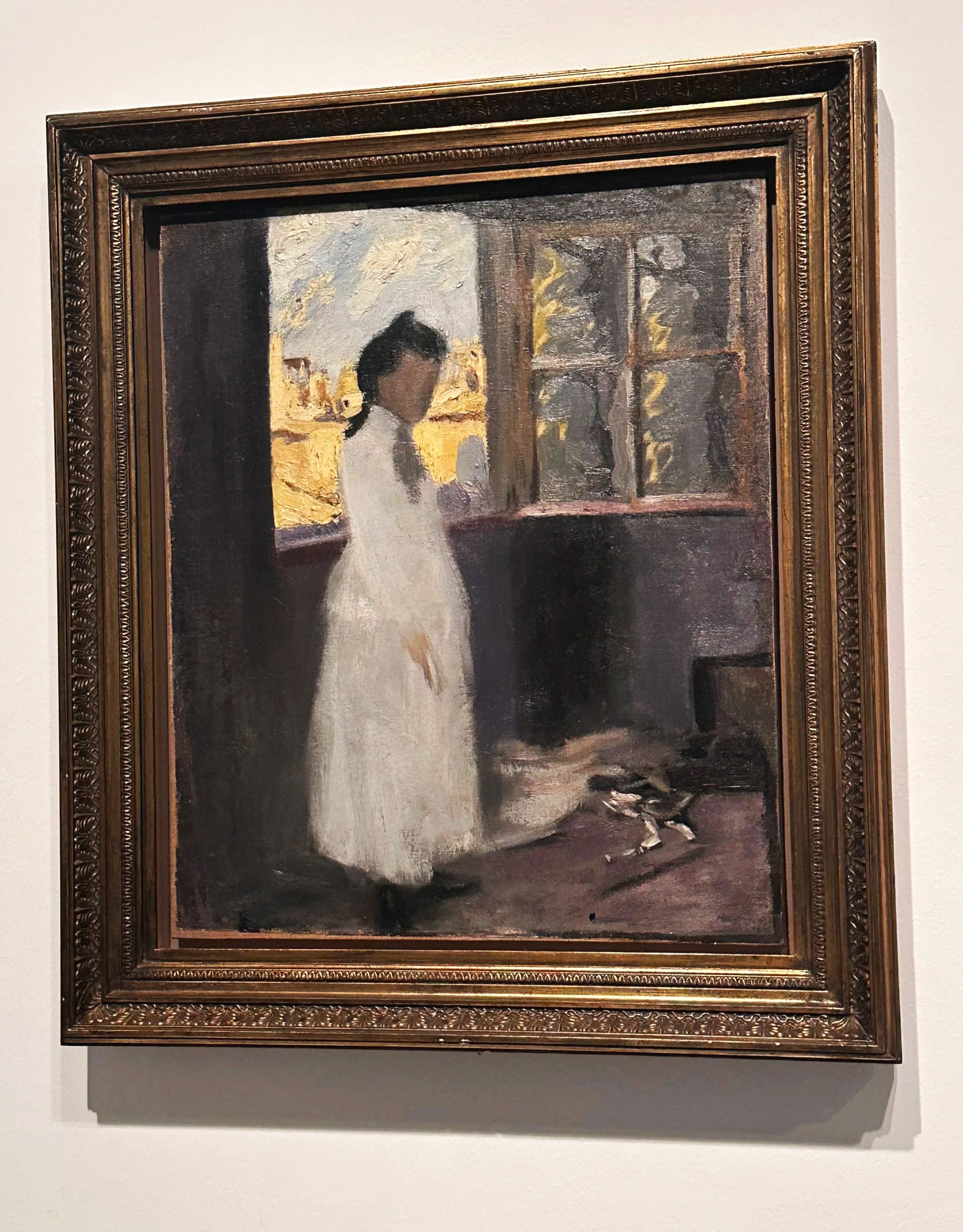
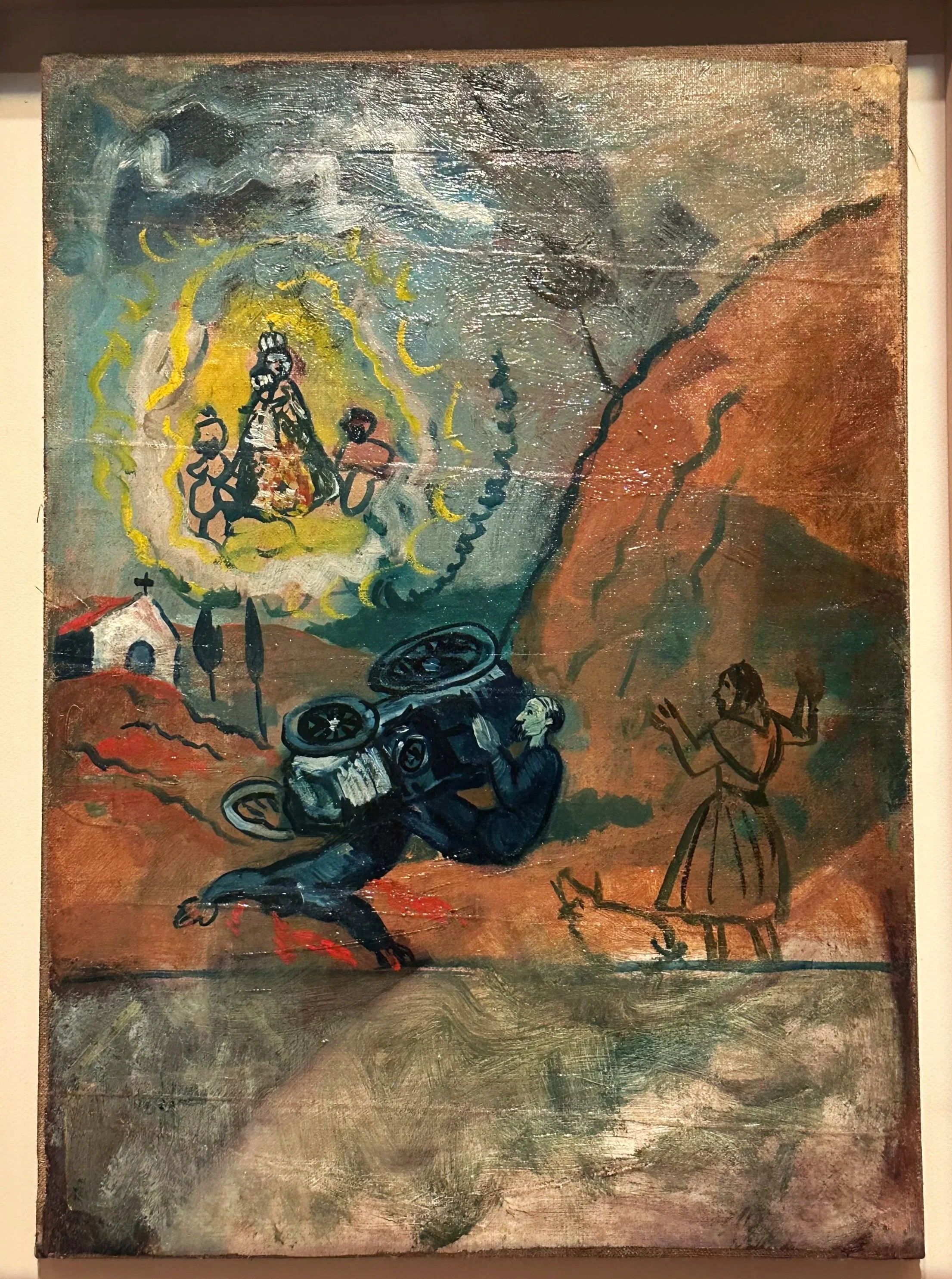
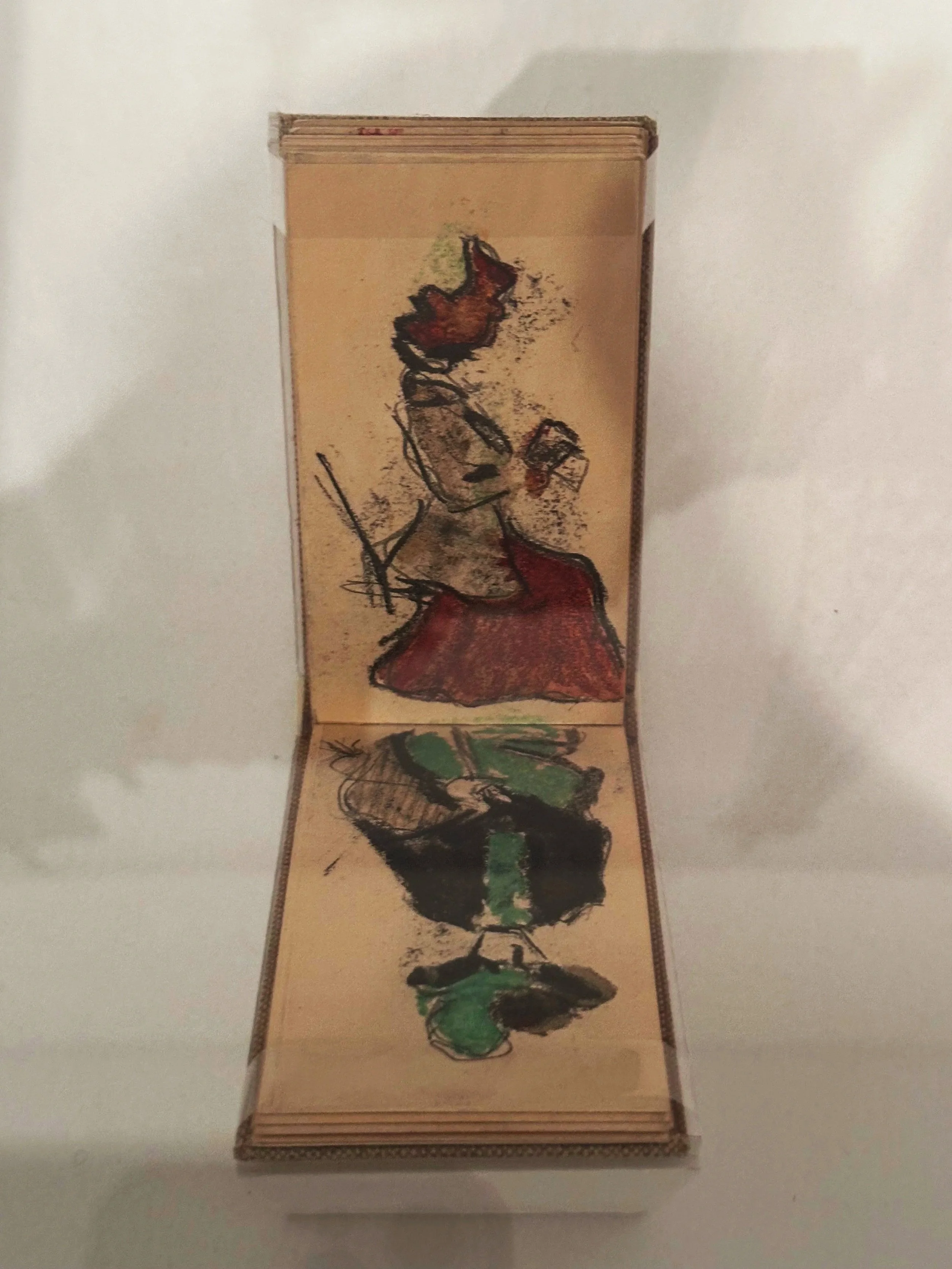
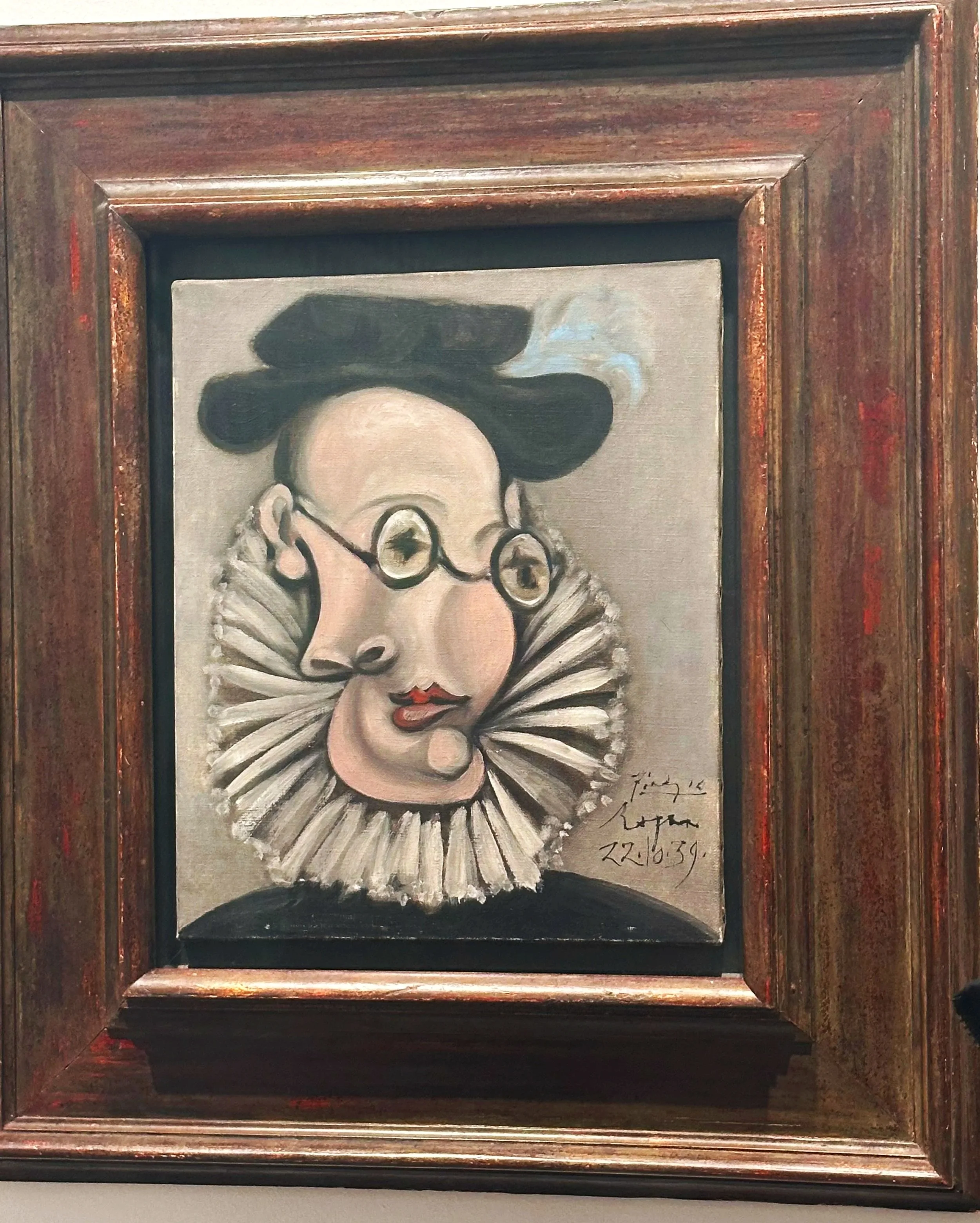
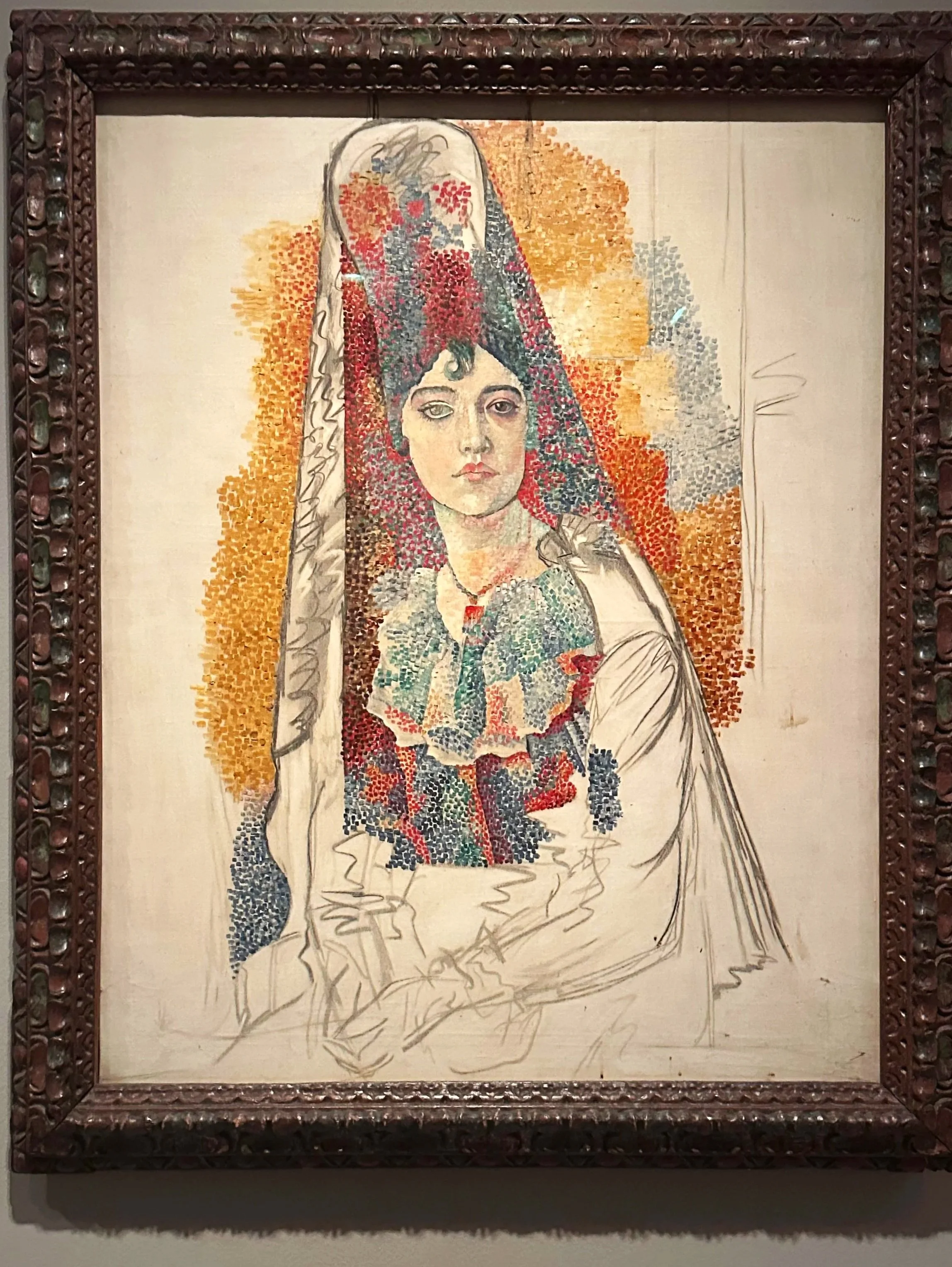
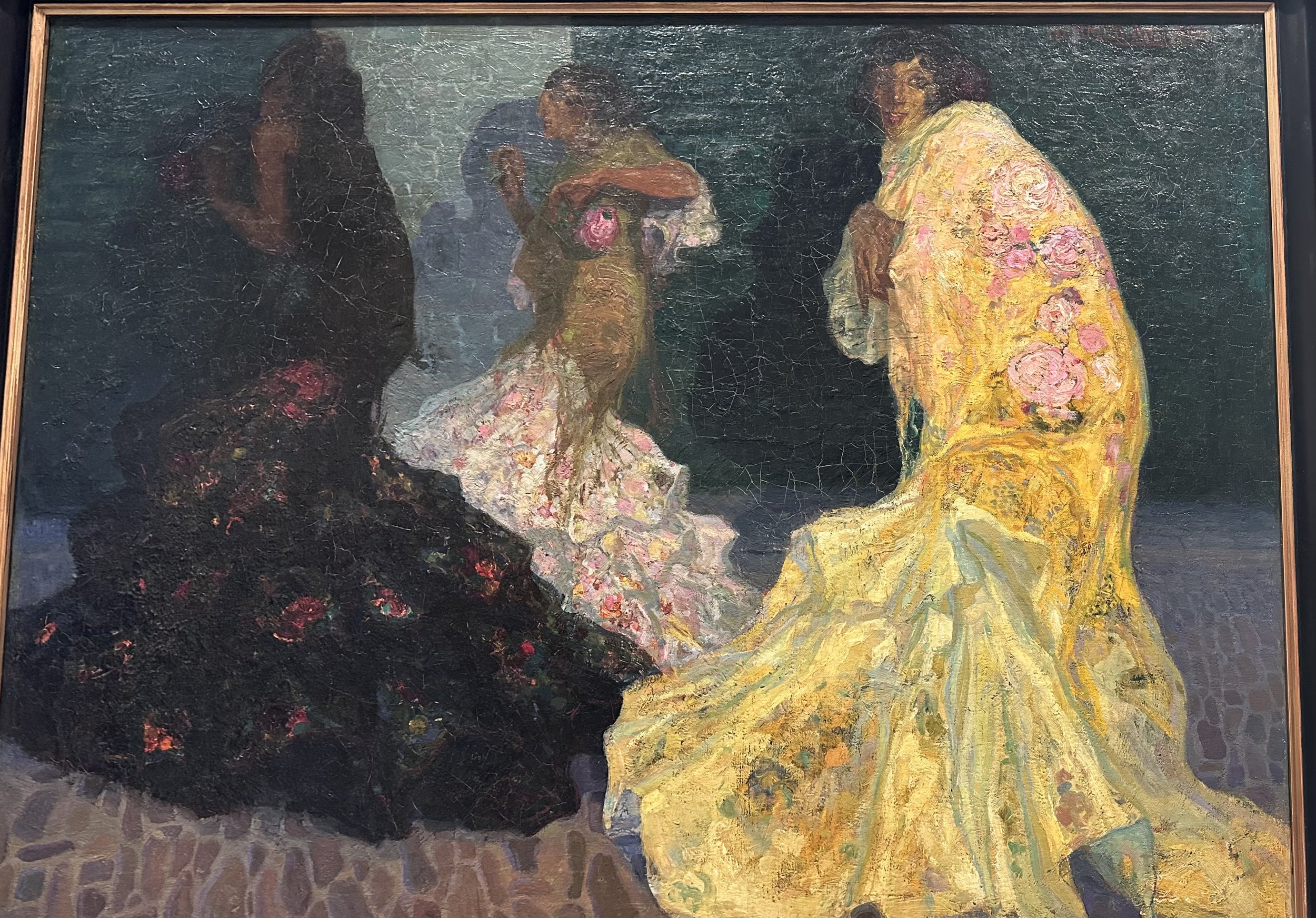
Another painting that really caught my attention was Picasso’s Woman in Mantilla. Unlike the playful abstraction of his Las Meninas series, this portrait feels intimate and quiet, almost like a pause in the whirlwind of his creativity. The woman’s gaze is steady and thoughtful, framed by the traditional Spanish mantilla. Through what looks like pointed brushwork, he’s able to capture both her elegance and a subtle vulnerability. I also love that the painting looks unfinished, exposing a draft underneath.
Somewhere In Between
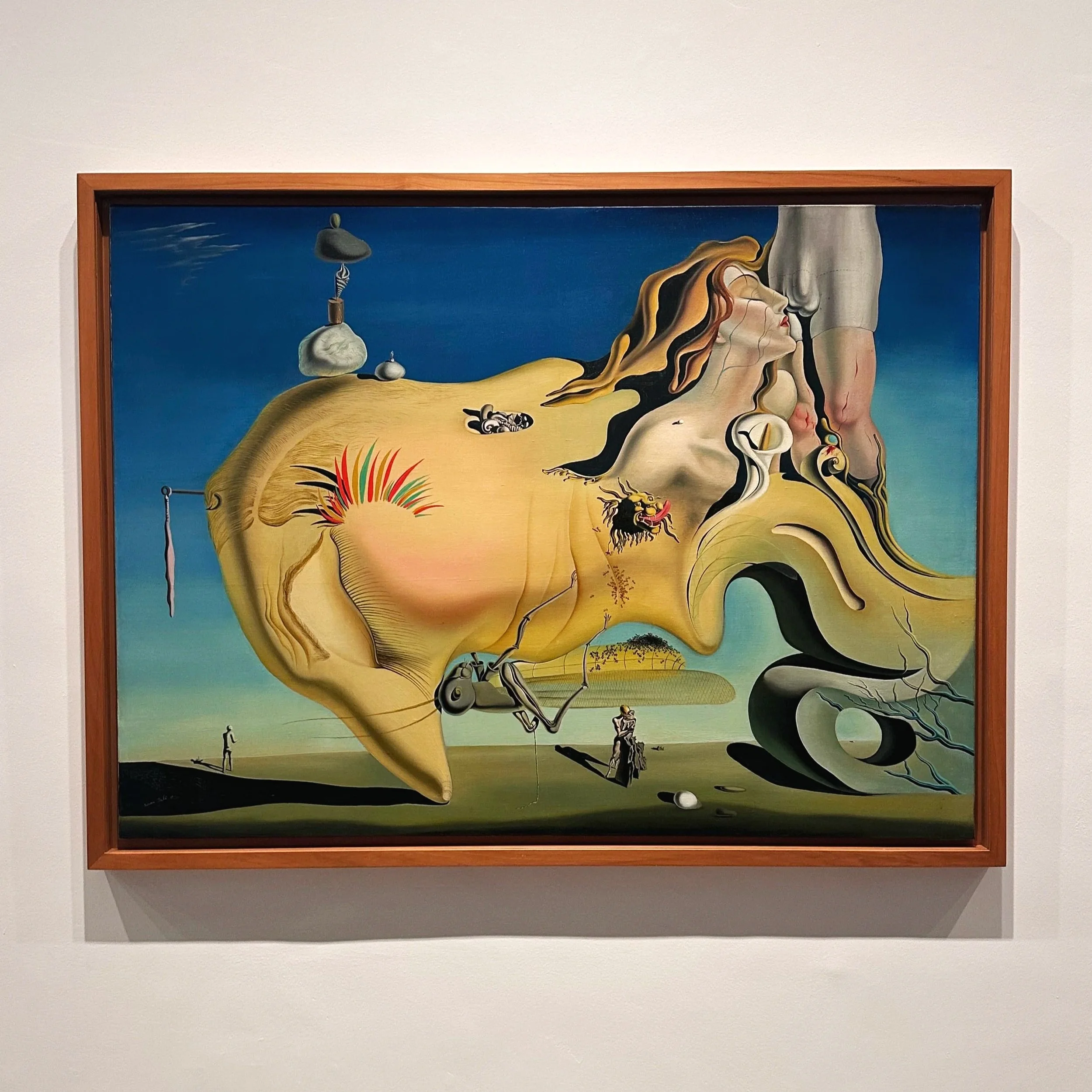
Sandwiched between the historic grandeur of the Prado and the playful experimentation of the Picasso Museum is the Museo Reina Sofía, Madrid’s modern art haven. Here, the energy feels more edgy, provocative, and surreal.
One of the pieces that caught my eye was Dalí’s dreamlike paintings, where reality seems to melt and bend, and every object has a strange, otherworldly quality. Walking through the galleries, you can see how Dalí and other modern masters pushed Spanish art into bold, unexpected directions. The Reina Sofía is a reminder that Spanish creativity isn’t just about tradition and royal portraiture—it can also be unsettling, inventive, and completely off the rails.
Is it Worth The Visit?
To be clear, this isn’t a sales pitch—I’m just sharing why Spain is, hands down, one of the most humbling and fascinating countries I’ve experienced in Europe. Between the imaginative and audacious architecture that seems to bend the rules, the art that ranges from Velázquez’s polished royal portraits and Goya’s nightmares-on-canvas to Picasso’s revolutionary experiments, and the food that’s both comforting and surprising—from smoky grilled octopus to saffron-kissed paellas—Spain offers a feast for all the senses. And then there’s the people: warm, humorous, and just the right amount of chaotic to make every encounter feel alive. It’s easy to see why this country stays with you long after you leave. So yes, please visit. Spain isn’t just a place to check off a list—it’s a place to explore, taste, feel, and return to again and again.